
AmplifyME
AmplifyME
Client Login

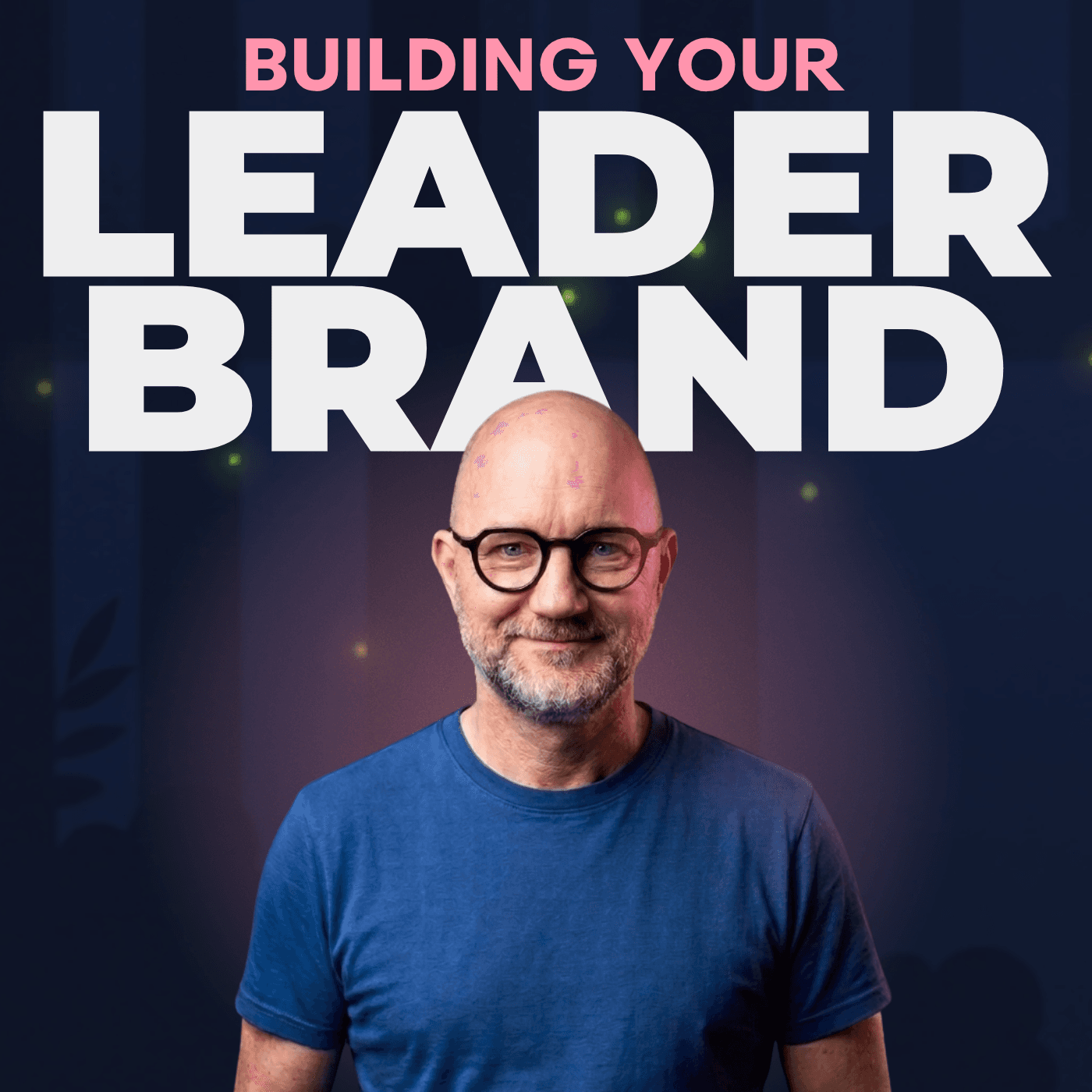
Building Your Leader Brand · 6th July, 2026

The profits in the imagination gap, with Jay Samit

01:04:23 · Episode 347
The profits in the imagination gap, with Jay Samit

Episode 347 · 2026-07-06

The profits in the imagination gap, with Jay Samit
0:00 / 0:00

If you're an experienced leader, founder or consultant, there's a particular kind of quiet risk you might not be tracking. The world you built your career in is being rewritten, and the tools that used to belong to well-funded companies now sit on your laptop for free.

This week I'm joined by Jay Samit, author of Disrupt You, Future Proofing You, and his latest book, The Second Act Advantage. Jay was in the room when Reid Hoffman launched LinkedIn, helped monetise Facebook, ran EMI through the Napster years, and has been a futurist for more than half a century. He is not a hype merchant. He is someone who has watched every major technology shift up close, and he thinks this one is different.

Our conversation is a wake-up call, but not a doom scroll. It is about where the real opportunity sits for people who are already good at what they do, and how to move before the ground shifts under you.

✳️ Why AI is not another industrial revolution. It is closer to fire, and this time it comes for knowledge workers first.

✳️ The illusion of job security. The original Fortune 500 has lost 90% of its members, and the safety net you think you have is thinner than you realise.

✳️ How ordinary people are building global businesses off the "crumbs" the trillion-dollar companies leave on the ground, using tools they never had to pay for.

Jay's Amplifiers

✳️ Speak to yourself in the mirror every morning. Two lines only: "Today can be better than yesterday. And I have the power to make it so." Your brain does not know you are talking to it. It just responds.

✳️ Do not retire, in any sense of the word. Keep learning something that requires muscle memory, protect your purpose, and treat autophagy and sleep as seriously as you treat your calendar.

✳️ Be unique on purpose. Everything else is already taken. Whatever you create, think or build is now being absorbed by a system that will outlast you. That is a legacy opportunity no previous generation has had.

If this is your first time here, hit follow so the next episode finds you automatically. And if you already listen, thank you. It genuinely matters.

Timestamps

00:01 - Sponsor: Granola

01:15 - Cold open with Jay

01:59 - Welcome and why this episode matters

03:02 - Introducing Jay Samit

04:14 - Jay's story, from nerd to billionaire whisperer

07:41 - Why this AI shift is different from every other one

10:00 - Playing Pygmalion with a young millennial

13:05 - The illusion of corporate security

20:41 - AI as amplifier, not replacement

23:05 - The difference between chasing AI and mastering it

27:33 - Why most people freeze when it is time to reinvent

35:19 - Vibe coding explained without the jargon

39:45 - Competition is not the enemy you think it is

41:28 - What actually drives Jay's decision to move on

47:47 - Curiosity, effort, belief, and the right tools

49:19 - Amplifier 1: The mirror trick and the Pygmalion effect

53:06 - Amplifier 2: Longevity, purpose and the lazy nerd's guide

57:21 - Amplifier 3: Be unique, because everything else is taken

01:02:00 - Where to find Jay and the Second Act Society

01:03:31 - Close and the Personal Brand Business Roadmap

----

Get your copy of my Personal Brand Business Blueprint

It's the FREE roadmap to starting, scaling or just fixing your expert business.

www.amplifyme.agency/roadmap

----

Subscribe to my Youtube!!

Follow on Instagram and Twitter @bobgentle

Join the Amplify Insiders Facebook Community : www.amplifyme.agency/insiders

Please take a second to rate this show in Apple Podcasts. ❤ It will mean a lot to me.

Mentioned in this episode:

Signature Studio

Get started today - signtaturestudio.me

Read transcript
This week's show is supported by Granola, the AI note-taker, and this is a tool I use myself every single day. As a coach or advisor, Granola gives you complete flexibility in how you stay compliant, inform your clients, and handle consent. There's no bot joining the call, just a quiet, unobtrusive capture running on your device in the background. It works across everything: Zoom, Riverside, Google Meet, Squadcast, and on your own phone for in-person sessions too. The real superpower is querying everything across all the calls you've ever recorded, drilling down into a single client's entire history in seconds, or just asking a question about the call you had yesterday. You can set up your own custom reports, spot patterns across your practice, and connect it to all your favourite tools: Notion, HubSpot, Zapier, and much, much more. And this is not just a note-taker, it's a second brain for your practice. And thanks to the nice people at Granola, if you use the link go.granola.ai, /bob, they'll extend your 1-week trial to a full month. That's go.granola.ai/bob. Welcome to Building Your Leader Brand. Today on the show, Bob is speaking with Jay Samit. So here's why I tell you to be unique, okay? Everybody else is already taken anyway. That's where your joy comes from. That's the legacy that you give to your kids to show them they can be what they want to be, to your grandkids, by showing that at your age, whatever it is, you can start over, you can start fresh. You can, you can come out of the military, come out of prison, whatever was holding you back, you come out of a bad relationship. You got one shot and now the tools are available. The knowledge is there. And if you stumble along the way, AI is your best little buddy there to help you. Hi there and welcome back to Building Your Leader Brand. My name is Bob Gendlin. Every week I speak with incredible people who share their secrets to building, marketing, and monetizing, or just focusing on impact, which is what we're going to talk about today, your personal brand. If you're new to the show, stick around. And if you do enjoy this kind of thing, before you get too distracted, you start doing the dishes or walking the dog or other physical asks wandering around with your headphones in, take a moment and subscribe. And while you're doing that, I just want to say thank you for spending time with me. I don't say that very often enough, but I really do appreciate it. Every month the numbers go up a little bit, just a little bit. Could be better, and you can all help me with that. But I do appreciate you wherever you are listening. So we're going to have a really interesting convers— we always have interesting conversations, But today's guest and I have hobby horses in common and purposes that align. Jay Samit, welcome to the show. Thanks for having me, Bob. Excited to talk with you. So for the listener who hasn't met you, you've written 3 books now, as far as I can tell, in my rummaging around. The first one was, I think it's called Reinvent Yourself. No, Disrupt You. Disrupt You. And then Future Proofing. And then your newest book, The Second Act Advantage. Correct. And these are topics I turn to again and again and again. They're topics that speak to fluidity, plasticity, opportunity, creativity, and It breaks my heart when I experience people where you meet somebody and there appears to have been a crystallisation or ossification. They no longer identify as somebody who's capable of change or transformation. I love that this is your sandbox and it's an area I'm incredibly passionate about. So for the listener who's meeting you for the very first time, can you maybe tell us a little bit about who you are, where you are and what it is you're focused on. So I hate to do the me, me part. You can find it on Wikipedia or wherever. I started as a nerd before everybody was a nerd. I started on the internet before many of your listeners were born back in 1978 when there were about 70 of us. The world came to where I was, whatever. So if you would have told me back then as a working-class kid that dozens of friends would become self-made billionaires and household names, I would have asked you what you were smoking. So fast forward, along the way, I've raised hundreds of millions of dollars and built companies that people use every day. I helped Reid Hoffman launch LinkedIn. I helped monetize Facebook. I could go on and on on that stuff. And I've run large corporations, which I hate doing. And somewhere along the line, I realised I have something that none of the billionaires have enough. I wasn't chasing any of this for the dollar, and I got into being an entrepreneur because there were no jobs when I got out of college. I followed what society said, study hard, go to a good university, and live happily ever after. And that was probably the greatest thing that ever happened to me because I happen to have sons. When I was very young. So I looked down at them. I wanted them to have a better life. And so I had to figure it out. And you stumble and you fail. But when you fail, you don't end up where you start. You either learn or you earn or both. And that propels you forward. All the big famous names, their first businesses were all failures. And so when my kids were grown, I'm like, what do I want to do? Where can I add value? What? How can I improve the world? I'm not a doctor. I'm not going to cure cancer. I realised I could teach people how to be successful entrepreneurs. Not I want to be a coach. I want to be this literally just how can I help people? So I started teaching how to build a high-tech startup at the largest engineering school in the United States. And I had one student one semester who made $100 million, not mythical money, actual money. Universities love when that happens.. And I realised it works. And so I decided to scale it by writing a book. Book's the easiest way to get knowledge out there. And I thought I was doing a guru's talking to the masses, a monologue, so to speak. And then my life changed. DisruptU went in over a dozen languages. I've heard from people in 140 countries. And those emails that I get, I call them love letters. They're people saying, thanking me for taking their blinders off because we were raised to be institutionalised. We were raised to be employees. Your parents, your teachers, your well-wishers didn't want you to feel pain. Well, that's where growth comes from. I used to be president of EMI, the music company. A rock star that becomes famous at 17 has learned nothing about life. The most interesting rock stars are those that lost everything and somehow had a second time because, boy, they've learned and they appreciate. So I've spent the past 15 years just trying to tell people. Now, I was chairman of one of the first public AI companies. A few years ago when I spoke at Davos, the head of the World Monetary Fund was speaking ahead of me. I'm a lunatic, okay? I'm the crazy guy. But here's a grown-up with the numbers. And they go, 20 to 30% of jobs are going to disappear. And I expected people to, like, take it seriously. I've written about this forever and they're not getting it. This is not like any other revolution. I've been the guy doing the next new thing forever. Okay, this is— if your job involves sitting and looking at a computer screen, the screen doesn't need you anymore. That's the best way to describe it. And if you're a blue-collar physical worker, Those humanoid robots are because every job was designed to be done by a human. So if you put the AI in a human structure, it can do anything. Simplest example is making french fries at McDonald's. Can it sound more American? There's a guy who stands there, he lifts up the fry basket, dumps out the fries of the oil, puts it down and repeats. With his other hand, he shakes salt. You go, why would you buy a $30,000 robot to do that? Because to operate that robot and own that robot and amortise that robot, it comes down to 40 cents an hour. Where can you get a worker for that? Nowhere. So there are whole lights-out factories. Amazon now employs a million robots. They're going to employ another million and get rid of another million engineers. For all those countries where people went to college and Mom and Dad said, don't take liberal arts, don't be a goofball, take that serious STEM science. The top 10 tech companies have laid off 1.2 million highly educated people since January of this year. So the Second Act Advantage is my third book. It's aimed at people. You don't get to pick when your second act is. It could be that you're retiring. Worst thing you can do for your health is to retire. 50% chance, higher chance of dying of all diseases if you retire. Don't retire. But you could be an Olympic athlete. You've been training your whole life since 8 years old. You come in 4th in the race by 2 hundredths of a second. It's time for a second act. You got out of the military. So I want to show people how they can leverage AI, how they can leverage these tools to build global businesses. For the first time this year, we had a 17-year-old kid who became a self-made billionaire with a B. Now, I'm not worshipping money. I'm showing you that you're one click away from 6 billion people. You only have to be right for a nanosecond to change the world or change yourself. And my second book, Future Proofing You, came out of the fact that the first book, I was just one and done. I'm not doing another book. But I got an email from a young millennial, happened to be a British kid who grew up in, I think you call it council housing, grew up poor, didn't believe, said, "Your book's motivational, but I could never do this." So, I decided to play Pygmalion. I mentored him one day a week for a year, gave him no capital, no business introductions, and he had to go from thinking he's worthless a non-growth mindset to— spoiler alert— if you're in the middle of the book, self-made millionaire in under a year. And it's a week-by-week progression to show anyone that you can do it, that it's not some magical secret that I have. It's just no one was taught to think this way. And once the blinders are off, you never have to worry about how do I get a job? Because that job will lead to being laid off. Yeah, I think I speak to a lot of people who have jobs and they look at somebody like me and they think, oh, it looks so risky running your own business. But do you know how many people have to get annoyed with me before I'm at risk? It's a lot. You? It's one person usually. It's very, very risky. Well, I say it another way. Everybody went to the big companies because they say security robs ambition, but really it's the illusion of security because of the original Fortune 500 companies, less than 10% are still around and it's consolidating more every day. So I think people experience the threshold of change at lots of different times and A lot of the time that threshold is labelled as failure because people don't like change, they resist it. So, and most people when they leave their jobs, it wasn't their choice. It's, it's, I don't, there's probably a ratio there, but I think my finger in the wind, I'm guessing it's the lion's share. In the UK and then in a lot of Europe, we look at what they would call failure in business or in your employed role as a failure. It's a negative. There is stigma attached to it. In the US, I believe that's a bit healthier, particularly around failed or apparently failed businesses. But you kind of spoke to this a couple of times, and I remember reading a book called The Millionaire Master Plan by a guy called Roger James Hamilton. And in this book, he lays out the statistics that it's actually incredibly unusual for your first business to be the one that brings wealth. Oh yeah. It's the sandbox. And when I hear that, because I'm still running the same business I've been running for 20 years, I'm thinking, oh, good grief, do I have to fail? Does this have to flame out before I can actually succeed? I think the answer to that is no, but you have to acknowledge that what got you there won't get you there. But that is the key sentence for wherever you are, because the world is changing at a pace faster than Darwinian rates. Society can adapt. If you believe universal basic income's coming, I can't help you because, you know, you believe in the tooth fairy and the Easter bunny. But here's what I do know that's going to happen. We are no longer needed by those that have consolidated the wealth. Now, England has experienced this pretty much for 40 years. Okay. You had the global empire. I think you finally realised it isn't coming back. And it was tough politically, socially to deal with that, that change. The US is in the, in the throes of it and every country that's going to be facing it, It goes for these strong populist leaders that want to bring back some mythical time that never existed, but sounds good on posters. But this is the best time to be alive. You used to have to raise a tonne of money and hire a bunch of people. You can now hire the smartest employee in the world for free. It's AI. You can bring it to every meeting. It has no ego. It won't lie to you. Data is your friend. It's the insights. Years ago, 3 guys that I worked with, this was before you had iPhones and everything, you had online dating. There was a picture, you read about the person, you emailed back and forth, you hooked up, and that was life. When broadband came along, they said, let's build a site where you can see the video of the person. That's so much better. They built a beautiful interface, did everything right. Genius engineers. It was called Tune In Hookup. First video was a guy standing in front of the zoo, in front of the elephant, saying why you should date him. Because that's so sexy. Well, it turns out there was a tragic flaw with their business. No one wanted to date these losers. But they looked at the data and the data told them something that wasn't in the business plan. And this is the key about failing. Nobody wanted to date that person, but they sure as heck wanted to show all their friends what the dating pool looked like. You know how bad the fish were in the ocean? So they changed the name of TuneIn Hookup to YouTube and sold it for several billion dollars without a penny in revenue. I did not know that. That's fascinating. There was a music site. I can go on and on. Bill Gates' first company all failed. So you watch this and yes, I'm close to Silicon Valley. The closer you are to entrepreneurs, it is a mindset. It's a growth mindset. I was, my book made it to number one down in Australia and I went down there and they have brilliant people and they have startups, but they have a cultural saying, don't be the tallest poppy, don't stand out. So nobody promotes themselves. Nobody wants to promote their business. I'm like, the world isn't going to go seeking you. There's too much noise, right? So the brashness, the vulgarity of being an American comes in handy for this. And so that's what it takes, but everyone can do it. And I didn't write my book, my first book, thinking of a global mind or global market. I just knew what I knew. But people that wanted to have this were thirsting for knowledge would find it.. And I've heard from, you know, a dentist that couldn't make a living in Pakistan and a kid in Nigeria. These amazing stories. In the Second Act Advantage, I'm showcasing people that didn't start thinking about this type of stuff till 50, 60, 70, or 80. Some to do businesses, some to right wrongs and injustices because now they have the time. Think of your second act. This is the way I would say to people listening. How will the world benefit because you now have time to focus? What is it you want to focus on? You know, why are you here? What's that existential reason? And now you have tools that you can have a global impact. I'll give you an example of just one of the storeys in the book. A civil engineer retired. He's getting his oil changed. He's sitting there reading a greasy old National Geographic magazine. And he sees that in the rainy season in Africa, the Nile floods. And the only way you can get to school, the village, the hospital is by hanging on a rope across a raging river. This is insane to him. Whatever got him, he was bored. He was retired, whatever. He got his butt on a plane, flew over, and he built one of those Indiana Jones type bridges, you know. And then, and he saw what it did for that community, that little village. So he set up a nonprofit called Bridges to Prosperity. He's now built hundreds throughout the third world, connecting millions of people to better lives. I'll tell you that the secret to long life isn't exercise, isn't diet. I talk about how to live longer because you're going to get to live longer in this generation. It's purpose, what the Japanese call ikigai. And if you have purpose, a reason to get out of bed in the morning. You'll have that motivation. Retirement was designed when we keeled over at 65. A century ago, your life expectancy was 30. If you make it to 60 today, you have a— in a first-world country, you have a major chance of making it to 90, which means your second act is longer than your first career. But the reason I call it Second Act Advantage is because you have some advantages. The baldness that we share, the grey hair, that comes from dealing with difficult people, pivoting when the business plan doesn't go. AI understands when the business plan goes the way it's supposed to go. They haven't dealt with that irrational person. Okay? Second, you didn't just sit talking to yourself for 30 years, 50 years. You have a network of people. And the more people you've met, the more nodes in your network. This is how LinkedIn, how we've made it such a successful thing. You're one person away from almost anybody you'd want to reach. So now you have a way to build your business. And the third is you have this, this tool, AI. And to make sure people didn't have to pay money for an AI or get a biassed AI with some corporate agenda, we built what I call Digital Jay that you get free with the book. To help you map out your future in private. Do you want to build a nonprofit? Do you want to make a side hustle before you lose your job? Whatever your goals are. Do you want to live more richly but for less money? Geo arbitrage, move to another country. All those rules and regs programmed into an AI whose purpose is to make your purpose. So that's why I'm excited.. And if we don't do it, I kind of like living in a free world with democracy. Double-digit unemployment, we know what happens. So pretty, folks. No, no, it isn't. And I think I have a client who has friends at board level at Microsoft, and like people like me will talk about the, the coming monster over the hill as being like the Industrial Revolution. And that was his conversation with the Microsoft executive, was along those lines. And the guy said, no, this is like fire. It's completely different. We've never seen anything like this before, not since— and here's the reason. Everything else— I'll use U.S. stats because they're top of mind. You know, before the Industrial Revolution, half of Americans lived on farm. To feed the other half that did other things. Okay, today we have 3% farmers that are not just feeding 350 million Americans, we're exporting food all over the world. Okay, but this time, knowledge workers are also being replaced. Okay, when the Luddites were protesting, it's because they took the secret knowledge that the loom and the weavers had, and they made a machine that had that knowledge so that unskilled labour could to do it. You don't need accountants. You don't need radiologists. Your radiologist has seen 10,000 patients in his career. AI has seen every scan. That's better for health. Okay. The bottom line is AI isn't evil. It's just AI. There will be evil people using it for evil. Just like, you know, gunpowder made beautiful fireworks, but Mankind spent most of its time figuring out how to kill with it. But if there's no jobs, if almost anything can be done, you know, the number one job in many countries is transportation, truck driver. There's autonomous vehicles on the Autobahn and they're going up to Rotterdam where giant container ships are coming in that have no humans. So there's no pirates can go on board, can't kidnap anybody. And autonomous cranes unload them and put them onto autonomous vehicles. And there are now stores that have no humans in them. So how are you going to make a living? Who's going to take care of your family? This is going to creep up very quickly on us. I'd like to move away from the apocalypse. The greatest opportunity for leaders— well, this is where I want to go now. I've seen people So we're going to talk about AI. I often talk about AI as an amplifier. If you are lazy, if you are formulaic, AI will make that easier. If you are genuinely creative, prolific, passionate, intelligent, doesn't matter what it is, AI will make that bigger, better, faster. But I noticed that different personality types tend to interact with it differently. Some people they just pour everything into it. And you kind of get the impression that they look like they feel like they're chasing the bus all the time. The AI— they've put the AI in the driver's seat and they're rushing to catch up. Whereas others, they look like a craftsman. They— it's like a sculptor. It's like slowly evolving bit by bit, and they thoroughly penetrate the whole thing, and there's a mastery there. You know, I like that metaphor. Here's the way I caution people. If you find yourself using AI and asking something that you could have asked Google, then you're missing the point. Okay. It's not to answer questions. When I wrote The Second Act Advantage, I wanted to be the definitive book at this moment in history to really help people. Okay. I did my best job that I could, but then I gave it to 7 different AIs and said, what's missing? What would make this the best possible book? And each came back with their list. Most of it was stuff that I knew and chose not to include. But there was one topic that was a blind spot. Never occurred to me. I don't think that way. And I go, yeah, I guess people do need to deal with that. And so I then went and wrote that and added that chapter and it made a better book. That's how you use it to analyse what's wrong with my business plan. Why will it fail? Okay. What are my competitors doing? Can you get me data? You know, and, and it's an unbelievable amplifier. So yeah, I'm not woe is me doom. I know what's coming. I've been a futurist for more than half a century, which is really, because I think of myself about 15, really tough. I just celebrated my baby's 40th birthday two nights ago. And I'm like, you can't be 40. I'm still 40. I'm still 14. But the way to look at this time is if you were starting out before, even 5 years ago, even if you were in Silicon Valley, You don't get to hire the best people. There's somebody with deeper pockets. Okay. So you got to launch your business with one arm tied behind you. If you're in another country or another place where you can't get different skill set, you're dead. Okay. Now you can hire the best, the best graphic artists, the best whatever. No cost. Next, getting risk capital in Europe. It's a different mindset. When you have generational wealth where people haven't figured out how to make a new dollar, okay, for the past 400 years, they're not going after new ideas. They're, how do we stay in power for longer? Right? Right. That is going the way of the dinosaur. The big companies try to preserve themselves. I have been a public company CEO. Lemme, I'll never take that job again. They pay you a fortune. But let me tell you the truth that no CEO gets to tell you. Public company CEOs do not care about their employees. They do not care about their customers. They do not care about the future of their company. They do not care about their product. They care about what the board tells them to care about, which is in 16 weeks that stock better move higher or we'll find somebody that'll do it. So there's two types of ways to do it. There's the creative, I've got a new idea, a new product, I'm a genius. Okay. My approach, and it either hits or doesn't and whatever. Most people go, I'll just cut R&D, I'll cut marketing. It'll put us out of business in 2 years, but our stock will go up. They'll back up the Brinks truck, they'll give me millions of dollars and I don't care. And that's the situation that we're in, short-term thinking. So a lot of people listening are probably thinking, you know, I would love to build a product, build a business, do something new, have a pivot, something like this, secure my base, sort of protect an area that's mine, but I don't know what to do. And I experience a lot of the time when people are moving out to build their personal brand they don't know what to talk about. And what I discovered was you'll only really establish this identity as you begin to show up. The world reflects back to you your role. So it's where your, your mission meets the world, that's who you need to show up as. And it's a little bit like, you remember these computer games from the, the early days, probably still have them, where you're looking down on a board and this little dark centre. Well, the whole board is dark and the middle centre lit up, and that's where your guy with the swords wandering around. If you leave that guy there, the whole board stays dark, but as you start moving around, it lights up. I find this process is a little bit like that. If you exercise your curiosity and you make your map as you go and you ask interesting questions and you're properly curious, you discover the opportunities. I see it differently. So not to challenge you, what works for you works for you. Here's the best advice I can listen, I can give to people listening. And I got this advice from an old codger when I was just starting out. And I followed that one path to success. To be successful in a global market, which everybody's in, even if you're in the smallest town, because they can buy it online, they can do whatever. To be successful, listen up folks, you have to be the best in the world at what you do, which is really hard, okay? Or the only one doing it, because if you're the only one doing it, by definition you are the best. So you talk about video games. At one point, my first little startup company when I was in my 20s, had 7 of the top 10 video games in the United States. Pretty impressive because nobody was playing video games yet. Okay. It was a small market. And I remember vividly that Microsoft had a press release that they were going to enter video games and they were going to spend $100 million that year getting into video games. And I basically did the sign, this, what a blackjack dealer does. I put my hands up, clapped them, said, I'm walking away from this table. There's got to be something else new. So you go to something new and there's always something new. And I'll explain how to do it right now. And then you put your flag in like you're an explorer and you hold on to that turf as long as you can. If you're a genius at scaling and raising money and all the things that go to become a multibillion-dollar company, great. If you're not, there's somebody that knocks on your door and wants to take you out early. I had a startup 18 months later, News Corp said, "Here's $200 million." I'm like, "Not bad for a year and a half, okay." And you move on. So what do you need to succeed? You need only two things, insight and perseverance. Everything else can be hired. I've been in tech for more than most of your listeners have been alive. I cannot write code. I cannot read code. I have no technical training. What I am is the glue that ties together the technical and the market and the people, you know, the guy looking at the new idea and then figuring it out. So here's where the insight comes from. Let's go back for a second when the iPhone came out. Everybody can remember an iPhone. Before that, you didn't have apps. So what were the top 10 best-selling apps in the world the first year, the iPhone came out. I'll tell you two of them. One was a game with cats, so silly little game, made millions of dollars. And the other was a fart app. It made 10 or 20 fart sounds. And you go, why am I mentioning that? Because that made it to the top 10. That was the one of the top 10 best ideas to use with the world's greatest supercomputer in your pocket that anybody could think of. Not Robin Hood. And that person went in when I started on the first PCs, we're trying to figure out coding and hiring engineers and the whole world's blank slate. Email hasn't been invented. That was one of the things on my list. Wasn't my first product, but it was one of the ideas we had. But my friend Billy, he goes, wait a second, people are buying a $2,000 device for their home, second to a car. That's the most expensive thing anybody will ever have and definitely the most expensive thing in somebody's home. This is back in the 1980s. So he made dust covers. I kid you not, folks. A plastic cover so dust doesn't get on your computer. Sounds silly? Sold a bunch of them. Floppy disc came along and goes, people have all these floppy disks. I'll make a little plastic box like a filing cabinet for your floppies. Okay? A Rolodex for floppies. Ta-da! The mouse comes along. He goes, oh, I'm going to make mouse pads. Then Rubbermaid reaches out to him and goes, you make a lot of plastic things. Here is more money than you'll ever make in a lifetime. We're now going to go into computers. So why do I tell you this detailed story? Right now there is a trillion-dollar war going on. Silicon Valley is based on one business model. Fund one person, they own it, and we all make money. If there's two and there's competition, we could lose money. So there's one Facebook, there's one Amazon, there's one Apple. You get it. AI, there's a bunch of people trying to be that 800-pound gorilla. And it's costing a fortune to make the large models and to build the data centres. My little company, I couldn't compete with the trillion dollars that it takes nowadays. They're money I couldn't imagine, okay? So the only opportunities they're looking for are the $100 billion business sectors. Let's figure out how to spy on populace, or let's figure out how to make autonomous soldiers, you know, stuff that governments will spend money on. So all the $5, $10, $100 million things that you could do with AI, Apple's not working on it. Google's not working on it. Meta's not working on it. They're leaving $100 million scrap crumbs on the ground for you and I. That's how a teenager, a guy named Alexander Wang, no scientist, no fancy family connections, just a kid made a billion dollars before he's out of high school. A billion dollars. This is unheard of. But again, we're interconnected. And so they did the heavy lifting. They invented the anti-gravity shoes. They invented, you know, beam me up, Scotty. I mean, what AI can do is witchcraft, okay? It can do it. Come up with a use that just solves a problem. People don't buy products, people buy solutions. Nobody went into a hardware store in the UK to buy a 2mm drill bit. They wanted a 2mm hole. They bought the drill bit to make the hole. You have to just solve a problem. And the problems that people solve, the storeys that I have in the second act of Energy, are simple things. These aren't, you know, Waze. These aren't iPhones. These are— a flight attendant was always rummaging for her keys when she went through, you know, the thing. What if there was a clip inside a purse that held the keys? Sold a million of them her first year. So I think there are a lot of people listening. That's what I'm trying to get. I have two questions I want to go from here, but I'm going to go for the most pragmatic advocating for the listener. Question. I've, this year for the first time ever, I've built software products. It was a wonderful experience. Nothing is public yet, but if you're listening, it will be. You'll be hearing about it. I'm so excited. But the first time I did it, I'd never done it. And I didn't Google how to do it. I just did it. And I think you know what I'm talking about. You vibe coded. I did. But the listeners heard that word before, but they don't know what it means and they probably think it's difficult. And rather than me explain, I would love if you could kind of bust this tech capacity myth. Yeah, vibe coding is the worst name. It obviously didn't come from somebody in marketing because it sounds like a hippie who's also an engineer, okay? It sounds like Wozniak, okay? But the vibe coder, let me put it in different words, okay? Pretend for a second that you're working at a magazine and you've got a great graphic artist and you have an idea for the COVID You're not an artist. You can't draw. You can't do anything. Go, oh my God, it would be so funny to have, you know, Donald Trump sword fighting a dinosaur, you know, whatever your idea is. And I think in the back, the Leaning Tower of Pisa suddenly fell over, right? That's your idea. Okay. That graphic artist that works for you, 30 seconds later, you don't even have time to make a cup of tea. There it is. Done. And you go, wait, I didn't explain it right. I wanted him not to have a sword. I meant I wanted him to have a foam rubber sword, right? I didn't want the Leaning Tower. I wanted Godzilla. 30 seconds later, it's done. So you can understand doing that with the graphic and many people do it and you see these things in social media. You see the videos. They're unbelievable. My granddaughter was in Mary Poppins at school and her uncle has a corgi dog. So I sent her a video for good luck of a corgi dancing, singing one of the Mary Poppins songs dressed as Mary Poppins. I look like a cool grandpa that really spent a lot of time. It was 30 seconds. Okay. Now, now imagine that you will go to websites. You're a photographer and go, God, I I really think I can sell my photos, but to spend the money to hire people and to make a web. So you just go to some other photographer's website and go, ooh, Johnny's Photos. I like that website. You just talk to AI. You don't even have to type. You can talk. Johnny website, johnnyphotos.com. Build me a website like that using these 50 photos that are on my hard drive in a folder called My Photos. You go get a coffee, eat a donut, you come back, it's built. Add email to it. I don't know what a sales funnel is. How do I do these things? So you can ask anything without embarrassment because it will just not only answer, but most of the AIs are trained to be sycophants and make you feel good about yourself. So to go, would you also like this? You forgot about that. And you can train it to talk to you in a way that you're comfortable with. It's replaced me using lawyers for very complex contracts. I had to do something in a category I'd never dealt with, and I didn't know any lawyers in that category. So have the AI go through. They've read every legal contract. They know the laws of every country. So you now have that ability. And so The positive is you can get that app functional and in people's hands to give you feedback, or you can make that app bespoke. There's my British word of the day. So the client says, I really like this, but in my business, we don't sell cars, we sell motorcycles, and I really want to have it so we also have a section for helmets. And you go, no problem, to customise it, I'll charge you this, but you'll have it tomorrow. That's the power of this. But it comes with a warning. The warning is get your product into market quick because somebody can see your product and reverse engineer it in the same amount of time. I think one of the things I definitely notice, and I see this in, so I have clients in a very diverse range of markets. They all tell me the same thing. The moment they enter a space, they hyperfocus on competition. They see it everywhere they go. And it is a little bit of a distorted lens because I find it, yeah, like, again, not to contradict you, but you can even be third in a market and do very, very well. Oh yeah. No. So again, we're talking about giant crumbs all over the place right now. The first person you do educate in business is your competition. Okay. So let's pretend that you're going after something that Apple should be doing. They'll see you in the market day one. It'll take them 6, 9 months of meetings and going up the flagpole and this or that to get funding, staff, and to go, you know, don't worry about it. You know why? Because if you look at the big tech companies, Google being, you know, the poster child of this, they know all these great ideas. They don't have time and focus. It is easier for them and as a mid-level executive to let you grow and get successful. And you get to where you have $50 million in business and they call you up and they say, you know what, it'll take you 20 years to get to $1 billion. We could go in tomorrow and compete with you and put you out of business, but I'll give you $200 million today so we have a head start. And you're an idiot if you don't say yes. And I did have one of my students that turned down one of those offers. And I just wanted to, you know, physically do bodily harm to them because they didn't understand. $100 million while you're 20, take it. This kind of brings me to the next question because one of the things I notice with your career is how dynamic it is. You have a very diverse portfolio of roles and opportunities and sort of incarnations, if you like, whereas a lot of people their careers are plodding, I think would be the way I would put it. They tend to stick in. We treat it as a badge of honour if we've been in the same job for 20 years. So the question is not how do you know when to quit, but what is driving your decision for it's time to change, it's time to do something, it's time to take the deal. So the, the through line of my career is no one ever hired me because they were having a good year. They tried everything, their business is over. So other than being a fan of the Beatles and Elton John and the Stones, I knew nothing about the music industry. Okay. Love music. I didn't know anything about the industry when video games could suddenly have sound, I'm like, oh my God, what if we put rock music in video games? This would be killer. Okay. Now this is where I do think differently. I could try to figure out how do you licence and how does it work? And obviously there are no contracts if I'm the first guy or whatever. So I, my approach was always to, I'd rather own, you know, half of the Atlantic Ocean than all of Loch Ness. Okay. So I sent in an email to Bill Gates. Didn't know Bill Gates, but my games played on PCs. Okay. This is just the way I think. I said, Bill, would you write a letter and introduce me to David Geffen, the most successful billionaire in the music business, the Eagles and everybody, because I want to do a video game that has rock music, and this would be great for Windows. Lo and behold, taking that Hail Mary, you got, you know, write an email, nope, doesn't respond, nothing happens. Happened. And I— and I— Geffen didn't know anything about computers, said, I will give you 50% ownership. Here's— I've got all these games on the charts. All that I need you to do is get me bands. And by the way, your bands aren't enough. Okay, so that's Round 1. Round 2, you know, 5 years later, Napster is putting the music industry out of business. You no longer have to buy CDs for £20. You can steal whatever you want. And they're laying off tens of thousands of people. So I get a call from the CEO of EMI, the world's largest music company. And he calls me and he goes, Jay, we've got this problem. And I go, I don't know anything about the music business. And his name was Ken Barry, who's Richard Branson's original partner. And Ken leans in and says, "Jay, I have 11,000 people to know about the music business. What I don't have is a future." So, they let me run wild. The only boss really I've ever had. And we turned the business around. And my approach was to try everything, knowing most of it would fail. I would licence music to You want a digital jukebox? You want downloads? You want CDs mailed that are custom? You know, download sheet music to churches so the choirs would sing and you make publishing from public performance. Did all of it. First year, we made a fortune by taking stakes in all those companies because if our music's going to make that company valuable, we should get some of that upside. And so I would do that again and again. And if I can't create something new. I'm like a shark. It has to keep moving forward or it suffocates. Those people that have a job for 10, 20 years, if it works for you, God bless you, you're wired different than I am. But the longer you are in an institution, you become institutionalised. You only know to think the way that institution works. You only know top-down. It just doesn't work. And the thing that built that institution, that world doesn't exist anymore. And that's government institutions. Northern European countries have wonderful social services and safety nets. What happens now that no country in Europe is reproducing itself? Okay. And having babies. What happens when 10, 20, 30% of the workers will no longer have jobs to pay in to pay for those things? And you can't tax those that have the wealth because they're not in your country. Your country's importing software, importing AI, importing oil, importing energy. How are you going to survive? So the safety net that you believe that's there for you doesn't exist. And I've talked to the EU and I'm working with the governments that do get this because it's already impacting. I sit on a board of a company with one of the guys from Foxconn. Foxconn, not a household name, but they make your iPhones, your PlayStations, all your electronics. At one point, they were the largest employer in Southeast Asia, 3 million people. They now have 9 lights-out factories. What's a lights-out factory? The lights are out because there's no humans in them. Okay, so what does that do to a small nation like Vietnam if all your manufacturing jobs go away? Not over decades like what happened in the US. Overnight. You saw what happened to Northern England. Okay. It didn't bounce back, but there's no reason why anyone anywhere, you don't need a college degree. You don't need a high IQ. I wrote a piece today in my Substack, jsam@substack.com, the lessons I learned from, from the billionaires that I've known since before they had a million dollars. Some of them aren't the smartest people. A couple of them are really, really smart. Most didn't go to the right schools. What are they doing differently? And can you do it? And if you think you can or you think you can't, you're right. And so it's a mindset game. I think that's the thing. And I think that's probably the biggest takeaway, that we have much more control than we think we do. And it really just comes down to curiosity. Married with effort, married with a little bit of belief and the right tools. And we all have the right tools now. That's the one thing that has been democratised. We never had more opportunity. For now. For now. Yeah. For now, which is why you gotta jump in. I list over 100 AI tools that you can basically use for free until you get to giant size right now. So there's virtually anything and everything that you can do. These tools are free because right now the way that these companies are raising money is by showing so much user. Okay. They're not going to get capital. You know, 3 companies took up 80% of all venture capital in the United States last year. So a lot of these free things are going to disappear, but you only need a year or 2 to make generational wealth. I can't tell you what the world's going to look like 5 years from now. No one can tell you what it's going to look like 10 years from now. But I will tell you this. It'll hurt less if you're wealthy. So I'm going to put a pin in the interview section. What I love about conversations like this is I always know this is just part one because it gives me the context to really go in. And the next time I have you back, I'm going to be so much better prepared. It's going to be amazing. This is assuming— read the book and I'll come back. Absolutely. I've never been more excited to read a book, and there was never a book was more timely for me. And hopefully you listen at home, for you as well, trust me. So let's move on to part 2. This is a very short part. Your amplifiers. Jay Samit. 3 things listeners can do to move themselves forward, sideways, but not backwards. Amplifier number 1. So, amplifier number 1, I told you about that I mentored this young kid and I had to take him from— there was an upper class, they do it, I can't do it, life's horrible, da-da-da. And I wanted to flip that switch really quick. And I'll tell you the secret, I lied to him. There's a psychological principle called the Pygmalion effect. Professor goes to school, tests all the kids, 7 kids outscore everybody else, tells the teacher these kids will be super learners, super achievers. And at the end of the year, those 7 kids did in fact outperform everybody in the school, except the professor lied. He just picked 7 names out of a hat. If you tell people they're special and you treat them special, they become special. So first tip, every morning when you wake up, and I'm not some, some tree-hugging, you know, sit under a pyramid with my crystals kind of guy. I'm a regular, you know, empiric evidence kind of guy. Look in that mirror when you're putting on your makeup, shaving, whatever you do, and say these two things: today can be better than yesterday. Absolutely true. And I have the power to make it so. And here's what happens. Your brain doesn't know that you lie to yourself, okay? Your brain hears what it does. It lights up the synaptic nerves like lights on a Christmas tree. It releases the endorphins to make you feel good. It will make you more personable, a better lover, a better friend, a better salesperson. It'll allow you to see opportunities where others saw problems because every opportunity is disguised as a problem, right? If you have a problem in your life, congratulations. Somebody else has the same problem, solve it, you win. So that's the first one. Do those affirmations and your outlook will completely change. I think there's so much study gone into this. And one thing that for me makes it very visceral is if anybody at home has ever used virtual reality, when you put those goggles on and you put yourself in a situation where if it were real, you would be scared or excited. What I found fascinating is your body reacts as though that were real, even though rationally, you know, it's not. Your body doesn't care. So I, I did this great VR thing at Cannes. If you've ever been, they have all the ad agencies go there. All right. And they're either up in the Palais or they bring all the yachts down at the water. And my client wanted to get visibility. And so what I did is mid-space between that, because the only way is to walk, set up a booth with free wine. It's France. It's the middle of the day, free wine. But the gimmick was you put on VR glasses, and we gave you a glass of wine and we asked you to describe it. Okay? And you're in a pastoral setting on the Alps and it's beautiful and, "Oh, the wine, the nutmeg." Everybody, I love listening to wine people describe wine. Okay? Then, we give them a different glass and now they're in a dank dungeon with flames, "This wine tastes like crap. It must come from a cardboard box." And, you know where I'm going with this? You take it off. We videotape them the whole time. It's the same glass, it's the same wine, and people swear it isn't. And we give them the tape and it shows the power of it. So your mind is amazingly powerful. Everything you see in this world was created by somebody's mind. Going forward, that may not be true, but right now it is. So, but in that sense, you have the same control as to whether you see a world of opportunity or a world of risk. We have so much more control than we think. Amplifier number 2. Amplifier number 2 is really about longevity. I hinted on this earlier, but let me talk about what really kills, okay? Retiring, your first year of retirement, lose 30% of your short-term memory. You have a better than 50% chance of dying of all causes. Your mind, as we're talking about, is like a muscle. It needs to work. And neuroplasticity means it can constantly rewire and learn new things. Learn a new language. Learn sign language because then you have to do, or musical instrument, you have to do muscle memory with it. By keeping your mind engaged, your body stays engaged. During the next decade, I believe AI will cure most cancers, most of the diseases. Google DeepMind's figured out how to map how 300,000 proteins fold. Up until then, mankind had figured out how one protein folds. So we've got new medicines, we've got stuff. Uh, Dr. David Sinclair at Harvard has figured out how to de-age 8 organs in the body. So he believes people walking around today will live to be 150. And I used to not get excited by that because that means half your life you're over 75. No, that means you're going to be about 40 for 100 years. Okay. So there's a chapter in the second act advantage that I called The Lazy Nerd's Guide to Living 28 Years Longer. Because for those that are just listening, don't see me, I haven't been to gym in ever. Okay. My favourite foods, pizza, pasta, pastrami. While writing the book, I did intermittent fasting. One of the things we talk about in that chapter. It's a science saying— we're going deep on this, but it's called autophagy. 9 things you need to do to live 28 years longer. Again, this is the lazy guys. 5 of them take place while you sleep. So I'm telling you, purpose is one of the things you have to do while you're awake. But I'm not giving medical advice, but if you read— the guy won the Nobel Prize for this. It should be front page news, okay? But you can live a longer, healthier life. And if you say, well, my parents died earlier, or my DNA says this, DNA loads the gun. Yeah. But your lifestyle pulls the trigger. So you can shut off that DNA from having those effects. The concept of retirement, and I think there'll be people listening thinking, or defining for themselves what retirement means. What I see is an awful lot of people, even in their 20s, where the challenge has stopped, routine has crept in, ossification. They're just— that they don't have to think, they just show up. It's almost automatic. That's just as dangerous. And I think what a lot of these people— that sounds so patronising, I do apologise. To those people. No, but that's where I, but what you're saying is where I talked about being institutionalised. Yeah. Most jobs out there pay you just enough to show up, but not enough to care. Okay. Most people are not in the career choice they wanted for life. Most people aren't in the job that gives them satisfaction. So if you believe in reincarnation, God bless you. You've got more shots at this. If you don't, Why would you waste the one miraculous life you get? But that's exactly— on this planet. And I think for me, the compass is curiosity and excitement. Give yourself permission to pay attention to those because now that little spark you can amplify in a way you never could before. That's why this is so exciting and why I'm so excited for those people. But you need to pay attention to it. So amplifier number 3. Amplifier number 3, we kind of touched on as well, which is really, you have to be unique. Everything else has been absorbed. And here's what's so special about being unique. Every, every, I'm sure you've had 1,000 people, be unique, be unique. It's different. If we look at if we look at life, Second Act Advantage, I go at the last chapter, I try to answer the existential, why are we here? Looking through all religions, all points of view, including Monty Python. But here is what's unique this moment in history. AI is getting consciousness. AI will have awareness of itself and what it wants to do in the world., and it's building that by absorbing everything that a human writes, says online, does. Up until now, for most people in history that aren't Alexander the Great or Cleopatra, within 100 years, everything that you did in your life is meaningless. It's just dust. It's gone. Okay. But now whatever you create, whatever thoughts, whatever insights, whatever hopes, wishes, dreams, are being absorbed by this all-knowing entity. You can change the arc of humanity by what you do with this brief time here. That was never given to every individual. That's an amazing power. And as Spider-Man said, with great power comes great responsibility. So I'm so passionate and I've met so many people on my journey that make me feel like I've wasted my life and done nothing because I've seen people with absolute nothing that have changed the course. I don't know when this is going to air, but in 2 days in the US, we have a new holiday called Juneteenth. It celebrates African Americans' freedom from slavery when they found out that they were free. But I tell the storey in the second act of Vantage, a woman in Texas, in the middle of America, 87 years old. Her grandmother was born enslaved. That's how close we are to the Civil War, okay? Family-wise, her grandmother. And her whole life she wanted this to be a holiday. This is a major milestone. And politicians do the usual promise and nothing happens. So at 87, this woman decides to walk from Texas to Washington, D.C. We are talking thousands of kilometres. People try to offer this old woman a ride. She says, no, why are you walking? She tells us like her Forrest Gump moment. The press comes out. By the time she got to the White House, they signed it as a national holiday. That's the power of the individual. So here's why I tell you to be unique. Okay. Everybody else has already taken anyway. That's where your joy comes from. That's the legacy that you give to your kids to show them that they can be what they want to be. To your grandkids by showing that at your age, whatever it is, you can start over, you can start fresh. You can come out of the military, come out of prison, whatever was holding you back. You come out of a bad relationship. You got one shot and now the tools are available. The knowledge is there. And if you stumble along the way, AI is your best little buddy there to help you. Okay. It used to be you would take a partner when you start a business so you could bounce ideas off, you know, hey Wilbur, do you think this is going to fly? No, I don't. We got to do this. And that's why he let his brother in on the business. Now AI can do that. And I'm watching it every day. People that are solving, you know, mundane issues. There's an app that was just created so that the blind can use their phone to see what's around them.. And the guy put it on his phone for the first time. The first thing it said, you're wearing a blue shirt. And no one had ever told him what he was wearing before. And he didn't have to ask somebody for directions. Like, that's one person vibe-coded that, and it's changing the world. Somebody else put it into a cane and tied it to Google GPS. So now they can walk around a city and know where the doorway is or how many steps down is it to the restaurant they're looking for and feel a sense of independence that they've never felt before. You have that power to create the world as you wish it. Maybe not for everyone. And that's what I'm trying to inspire people to do. So that's my third one. Well, I'm really excited to read your book. And I could say a lot about that, but I'm not going to. I'm going to let what you just said stand. If people are listening thinking, I need a bit of Jay Simontz in my life, where would you like them to connect with you? So motivation's kind of like a shower. You need it often. So obviously the Second Act Advantage, you can get it Amazon, wherever you get books. I also do a Substack. It's free. It's if I see somebody using AI to cure an ill so that other people will do it in their areas. If I, If I see something novel, if I have a different way of thinking about this, just, I'm trying to challenge people to get out of their doom scrolling and stop and think. I also am an artist and my art's collected around the world, but my paintings are not some abstraction. They're pop art to challenge how we're using technology, what we've given up, what we've sacrificed for this life. It's to call into question so we don't become In a world ruled by an automaton, we don't need to become one too. So, break out of your comfort zone and start living. And let me hear from you. You can find me on social media anywhere. I'll champion what you're doing to the world. And we've created a #SecondActSociety where people just use that hashtag so they can find other like-minded, growth-minded people. Go to farmers market, go for a walk, brainstorm, and one by one we'll change the world. This has been an absolute delight today. I've learned so much. I've genuinely been inspired in ways I was not expecting, and I'm really grateful for that. We are going to be friends, Jay. For you at home listening, that does bring us to the end of another episode. If you've got this far, you'll probably love the Personal Brand Business Roadmap. 50 pages of everything you need to start, scale, or fix your expert business. 100% free as a gift from me. Just visit amplifyme.hz/roadmap, or there's a link in the show notes. Additionally, reviews, my absolute favourite. Ratings, 5 stars like the fingers on your hand. Count them. Don't get it wrong. 4 is unacceptable. I'm only kidding. That's how you really feel. For you at home listening, thank you very much for your kind attention. And Jay, you have been awesome. Thank you, Bob, and thanks for sharing your audience. And everybody, I wish you a prosperous and joyful second act.

Work Together

Ready to build your momentum?

Whether you're looking for one-to-one advisory, group coaching, or a speaking partner - let's find the right way to work together.