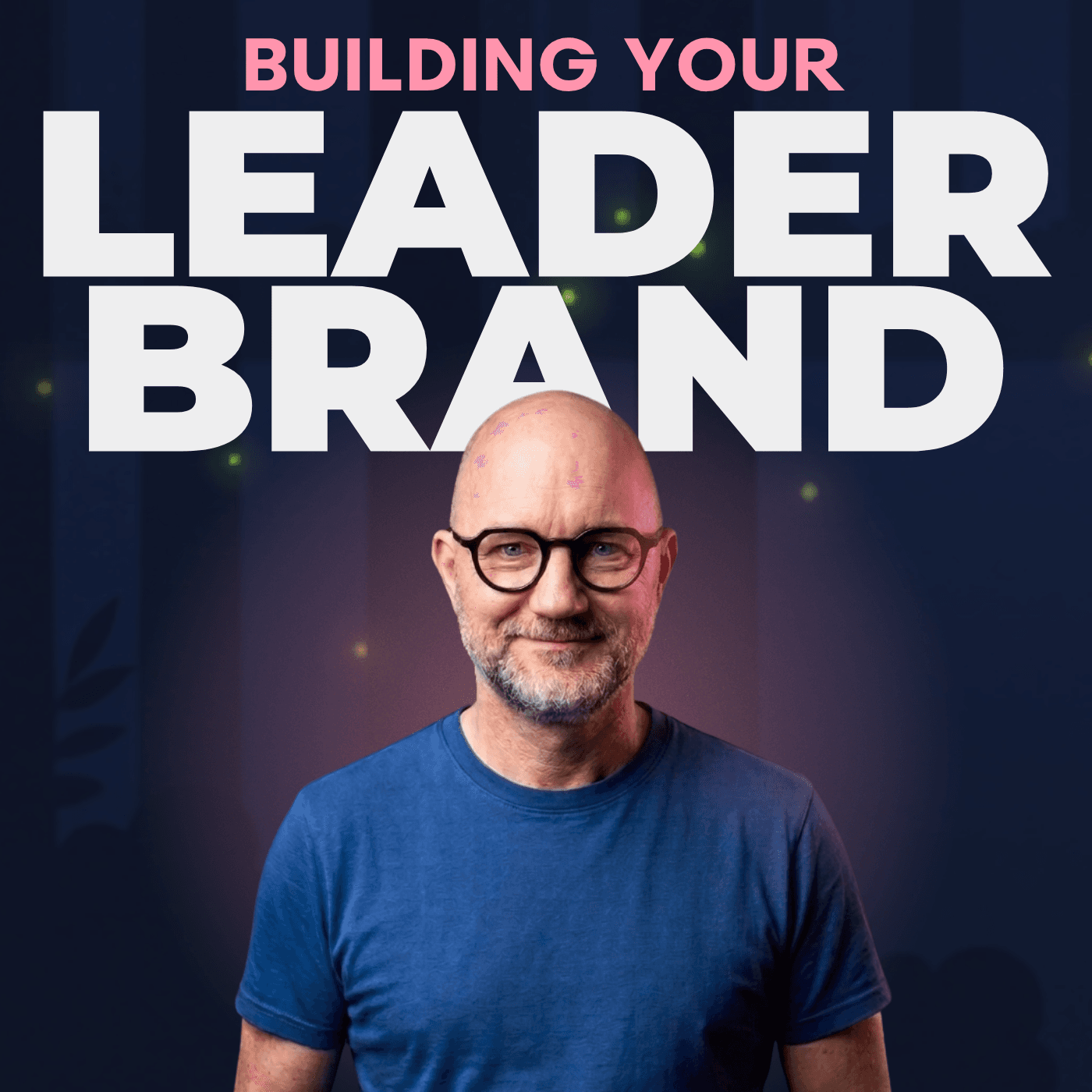
Grow up and show up - building the creator habit, with Travis Brown
54:51
AmplifyME Podcast · 2022-01-24
Grow up and show up - building the creator habit, with Travis BrownGrow up and show up - building the creator habit, with Travis Brown
0:00 / 0:00
So the truth is that if you want to get noticed on social media you have to earn attention on somebody else's feed. This week’s guest does that - pretty much every day on instagram. There’s frankly nobody else whose posts I save and share more often.
Prolific creators are people I pay attention to - particularly when they give me such value so I’m thrilled to welcome Travis Brown to the show this week.
poddecks.com
----
Get your copy of my Personal Brand Business Blueprint
It's the FREE roadmap to starting, scaling or just fixing your expert business.
Please take a second to rate this show in Apple Podcasts. ❤ It will mean a lot to me.
Mentioned in this episode:
Signature Studio
Get started today - signtaturestudio.me
Read transcript
Welcome to Amplify the Personal Brand Entrepreneur Show. Today on the show, Bob is speaking with Travis Brown.
The reason people love podcast content is because it's easy, easy to consume. I don't have to look at it. I can do it while I do other things. And it's all built on an RSS fee, which may seem like an old technology, but in reality, it's setting us all up for a great future. Because nobody owns RSS. It's just a mechanism that allows you to transmit. So if I post on Facebook or Instagram or TikTok or YouTube, I'm at the mercy of will they show my post to more people? Will they show my content where RSS feed is either on or off? You're either subscribed to it or you're not. And I think that it's going to set podcasting up as an industry to actually protect creators from some of these big, giant global corporations kind of rearing their heads and stealing the magic of being able to broadcast to the entire world.
Hi there, and welcome back to Amplify the Personal Brand Entrepreneurship. My name is Bob Gentle, and every week I'm joined by incredible and inspiring people who share what makes their business work. If you've just hit play, then while you have the app open, hit the subscribe button. And if you're on the iPhone, then it's the plus icon or the follow icon. That way you won't miss another episode. Before I jump into introducing this week's guest, just a quick reminder. After nearly 200 of these interviews, I've learned a thing or two about what makes business work online. And it turns out success does leave clues. And I want to offer that map to you. Head over to my website and grab your copy of The Personal Brand Business Roadmap. It's everything you need to start scale or just fix your personal brand businesses yours for free as a gift from me. The truth is that if you want to get noticed on social media, you have to earn attention on somebody else's feed. And this week's guest does that pretty much every day on Instagram. For me, there's frankly nobody else whose posts I save and share more often.
Prolific creators are people I pay attention to, particularly when they give me as much value. So I'm thrilled to welcome Travis Brown to the show this week. Travis, welcome to the show.
Hey, Bob, thanks for having me, man. I love the show and I love your mission, and it's going to be so awesome to be on this podcast.
Well, we met on Podfest, and Podfest is the home of podcast nerds around the world, and I was really impressed with your presentation. That was when I first asked you to come on the show. I'm not just like an Instagram fanboy, but I am. So for the listener who doesn't know you, why don't you just tell us a little bit about who you are, where you are, and what makes Travis Brown role?
Yeah. So I'm Travis, and I'm pretty much obsessed with the medium of podcasting. So I spent a lot of my life trying to help people in one way or another, whether that be helping them launch a podcast, helping them edit their podcast, helping them find and grow an audience, and even helping them monetize that podcast. And I'm out here in Aurora, Illinois, which is a suburb of Chicago, so I'm in the US. It's five deg here. I don't know why I'm telling you, the weather, it's really cold here. And I can't think of anything better than being somewhere warm during the winters in Chicago, but I'm just obsessed with helping people reach their maximum potential with this frontier of the digital age. I think we're just in an incredible time right now. And I think if you want to podcast or YouTube or start an ecommerce business, there's no better time than now. And so I've sort of dedicated myself to just elevating creators, helping them overcome obstacles that keep them from following their dreams and getting a chance to experience the lifestyle of a self employed creator or entrepreneur.
Obviously, I introduced you as a creator first rather than as a podcaster, because for me, you really are one of the most practically creative people I come across on Instagram. There's lots of people tell you all kinds of algorithm hacks that, you know, they're not going to work. But in terms of engaging people and actually getting them to pay attention and getting them to build this parasocial relationship, which is so powerful online, you're one of the best people I've seen at that, but not only doing it, educating people on that. And I think that's one thing that a lot of people who are listening, if they are podcasters, podcasting is great. If you like to hide, if you want to grow your audience, you're going to need to play a slightly different game from simply doing a podcast and hoping people find it. So I want to dig into that a little bit first.
Yeah. I appreciate you calling me a creator, because that's what I in my heart know I am. But I think most of the people that either or in my community, they think of me as like a podcaster or a podcast coach. So I really appreciate that, because that's the highest compliment I can receive. I think of myself as an Uber creative person, and I've been studying social media and all these different ways to where I can to grow a community and access people and grow this. And so this is a really fun topic to talk about, because again, I think this is the best time in the world ever to be able to reach the entire globe through your phone.
Absolutely. If I was to get under the essence of what I'm talking about here in terms of podcasting, yeah. It's easy to be a great podcaster in many respects, but to be a leader in the podcasting space, that's a harder thing. And I think that's where you've elevated things from simply showing up and having great conversations to being a creator that can actually get some reach and connect with people across different platforms. We can talk about that in a minute. So we talked about podcast editing. We talked about Podcast Builders Club, we talked about podcasts. There's a lot of different things going on. But before we go there, I think let's talk about podcasting itself and its potential to change the game radically for people. Certainly from my own experience, podcasting has changed my life. There is no other way I could put it. Yes, it's changed my business, but it's changed my mindset. It's changed my vision of what's possible for my business. It's reached into every aspect of my life and changed things. You working with lots of different podcasters. You must hear similar stories all the time. So I guess what I would throw to you is what is the potential for podcasting and what is it about it that makes it so exciting for you as a platform?
Yes. I think one of the things that kind of carries over in my life, like, I used to be a professional musician, and so obviously I have that kind of extroverted mindset. But there's a lot of carryover from music and songwriting into podcasting. And I think if we roll time backwards, communication and stories are such a big part of humanity, right? We would sit around a campfire and share stories so we can protect ourselves and pass down traditions and legacies. And then you fast forward to when radio was sort of the big medium where people would crowd around a radio. And it's just really like the communication aspect is really embedded into who we are as people. So over the last ten years, I've seen a lot of changes in podcasting that are really good for the industry, but I haven't seen a lot of changes in podcasting itself. And you might say, like, oh, podcasting is outdated, or it needs an upgrade, or it needs to expand. But in reality, I think podcast creators in a really great space because it's audio based. So it's typically one of the easier platforms to create on. It's an easier medium.
You don't have to be on video, you don't have to have graphics. You're really using your words and storytelling and conversations to create content. And the reason people love podcast content is because it's easy to consume. I don't have to look at it. I can do it while I do other things. And it's all built on an RSS feed, which may seem like an old technology, but in reality, it's setting us all up for a great future because nobody owns RSS. It's just a mechanism that allows you to transmit. So if I post on Facebook or Instagram or TikTok or YouTube, I'm at the mercy of will they show my post to more people? Will they show my content where RSS feed is either on or off? You're either subscribed to it or you're not. And I think that's going to set podcasting up as an industry to actually protect creators from some of these big giant global corporations kind of rearing their heads and stealing the magic of being able to broadcast to the entire world and share a message about whether it be super niche or super avant garde or educational. And I just think that I don't think podcasting is going to change very much, because really, again, it just comes down to it's an audio platform.
But the things that are changing in the good part of it are technology is catching up to where we have all these tools that we can use to podcast easier. When I first started, there were no tools that even close to what we have today that allow us to record and make clips and level out our audio. And so I think where we're going with podcasting and why I think it's the best medium is it just falls back to this storytelling, sharing messages, the human voice and communication, and those all build up to a very beautiful way to transmit information.
If I look at YouTube or if I look at blogging, those are the two other main content channels that I see in terms of building up a legacy content bank. Really, if you're looking at a long term investment in content, it's going to be podcast or YouTube or blog. With YouTube and with blogs, you have the ability to somehow manage your reach and invest in your reach. With podcasts, that seems a lot harder. You're very much at the mercy of Spotify and Apple podcasts in the main, largely Apple podcasts. So I've had a few clients that have podcasts, and one or two of them, they've just gone crazy, purely down to the name of their show, whereas others, you would think these are diamonds, but they're just not getting the reach. And there doesn't seem to be an awful lot that we can do to stimulate that reach. How do you address that particular challenge of actually finding the audience you actually deserve?
Yeah. So discoverability is absolutely the big leak in podcasting. Apple isn't in the business of really promoting podcasts. I'd say podcasts are probably like the last on Apple's list of their priorities, and Spotify is really taking it up a notch. But that's a closed garden, and they want people on their platform. So when it comes to Discoverability, there's really a few factors that we take into accountability. One is the fact that you're a needle in a haystack, and just because you publish something guarantees that no one will find it right. So we have to start by creating something that is, in my opinion, inclusive, like really thinking of the audience as a community, really thinking of the audience as the beneficiary, not just us talking for our own vanity, but like, really bringing the audience something of value and making sure that they know that if they enjoy the content, that it's very helpful if they share it with somebody who would enjoy the same content. Word of mouth, I think, is more valuable than an Advertisement, more valuable than new and noteworthy. When somebody tells you, hey, you got to cheque this out, you are 90% more likely to press the button.
Now, the other avenues become the places where the eyeballs are. Right? So you have to figure out who your podcast is for, what kind of person they are, what kind of demographic. I mean, just five years in difference in age can put someone from Instagram to TikTok, right, or YouTube to another platform. So you want to kind of figure out who is the show for. And I know there's a lot of people out there that say, Describe your exact perfect avatar down to the colour of hair on their head, but I think it's a segment of people. And then once you can determine who that segment is, you need to think about their behaviours, what platform are they going on? Because that's the platform you're going to need to use in order to create awareness around yourself and of course, sharing that podcast in that realm. So podcasters are at the mercy of either having a really great content strategy or spending money on ad dollars. Right? And I don't think that there's a wrong way to do it. I run a lot of ads myself. A lot of people complain about big data and they have all the information, but you also have access to that information.
You just have to pay to use it, and you can get very detailed in the way that you use it. So it's actually a benefit I'm waiting for, or I'm going to have to create it myself. A way where we can get independent creators to the top of the feed, independent creators getting their podcast exposed. But until that point, you can build a personal brand, or you can do whatever you can on social media to complement the podcast and build a community there. Or you can just straight up create some magnetic content that will convert to listeners and invest in that advertising segment and serving your content up to the right people. And I'm not a Facebook genius or ad genius. I started a six figure brand on accident and I did it all by starting off with promoted posts. And those promoted posts allowed me to target podcasters or fans of Pat Flynn or GaryVee or all the places that I thought my audience would be looking so I could insert myself into what they were looking at and hopefully convince them to come my way and cheque out what I had to share with them.
It really comes down to those big three for me. And a lot of people have varying opinions on those because they don't want to invest themselves in social media or they don't want to invest the money in their podcast. They want it to do the magical Joe Rogan thing where they just show up, kind of hang out, and then it just blows up. And when I say blows up, it takes ten years to explode. Right. But I think that's what we're limited to right now. Obviously, casting is a really great way to get exposed to new audiences, but it really is a soldier on the ground style of media to try to grow. There aren't any tools in RSS feeds or podcast hosts that are really going to help you get exposed as much as off platform, if that makes sense.
Yeah. I think in summary, you kind of have to do some work. But the truth is, how many listeners do you really need? How many people do you need to connect with? If you have a true crime podcast, maybe that's kind of a lot from my kind of show. And for many others, a small audience can be a great audience.
Yeah. I'm a big fan of Kevin Kelly's 1000 True Fans article. If you haven't read this, I think it's like a one page blog post, but he describes the fact that you don't need to hit critical mass in order to make a living as a creator. And so podcasters are constantly asking me how to make money, and what they're being shown right now is that the only way to get that money is like either a straight brand deal or having Juicy Fruit gum commercials stuck in your podcast wherever they feel like putting it in. And I don't believe that to be true. I think the podcast is an authority builder. It's a trust builder. It's a relationship builder in a different way than other pieces of content are. And if you do that the right way, you could set yourself up to have multiple streams of income and never, ever have to have a Casper mattress. Advertisement interrupt your great content.
So we can come to monetization in a little bit, but I think I want to speak to what I hope is lots of people who've probably talked themselves into, you know, what, a podcast would be a great idea for me because I think it can be very easy to talk people into that it's a good idea. But then that step to taking action, something happens in between. So as somebody who works with new podcasters all the time, what do you see is the most common new podcast or anxiety? And how do you help people pass that?
Yes. So the first thing that most new podcasters encounter is simply just impostor syndrome, which is, I'm not an expert. Do I deserve to be putting information out onto the Internet? Like who's going to listen to me? And the truth of the matter is you don't have to be an expert. The beauty of podcasting is that it's open to all and your stories and your experience are unlike any other person's experiences, and so they are valid. I'd like to start with letting people know that you don't have to have some certification in order to be able to do this. Now, we all suffer from imposter syndrome. It's just kind of baked into us because it's our brains protecting us from danger. And it's just something you have to cope with. I think as a creator long term, you just have to realise that, hey, I'm running my own race. There's people that are going to be ahead of me, people are going to be behind me. It's all a matter of how you look at that from a perspective standpoint. Now, next, there's usually a misconception that they're going to launch this podcast and that the entire world is going to care about it immediately and they're going to have all these downloads and they don't realise that in the beginning it's going to be your friends and your family, maybe your mom that are listening and that number is going to slowly grow.
I've never planted anything in my garden that grew full steam overnight. Right? It takes time. You water it, you nurture it, you look at it, you give it light, right? And it grows slowly. So getting people to understand that the growth, the growth curve takes time with evergreen content. And you mentioned this earlier, legacy content, which I absolutely love. That phrase is an episode doesn't expire after a week. It lives there forever. And most likely the people that really need to hear your podcast haven't found you yet. And when they do, they're going to be able to go back through this amazing catalogue of material and do that on demand whenever they want. You don't have to drip it out, you don't have to do anything, which is amazing. And the third is just really it's analytics. Like people get obsessed with a dashboard that tells them how many people downloaded and they get obsessed by these numbers if they're not growing. It's almost like new podcasters just come straight out of the corporate world and they're looking at a graph and they just need the graph to keep rising. And what happens is they let the graph.
They let the analytics determine the value of their content. They say, well, 20 people or 50 people only listen to this. And then they say, well, my episode is only worth this many people listening. And my big qualm with analytics are, yes, they're good for KPIs and learning, and there's some things that analytics are good for, but how do you measure something that never stops growing? How do you measure something that if a podcast was up for a week and then it came down? Okay, we have a number of people that listen to that podcast, but this goes on forever. So you're telling me that because your podcast got 50 downloads week one, but it gets 5000 in a year, that it's not worth anything, and that affects their creativity, that affects how they come to the microphone. And this is a podcasting is sort of like a free form, never ending marathon piece of content. And if you can go into with the mindset that you're just going to go do the best content you possibly can every time you plug in your microphone and you don't have to worry about the numbers, you don't have, like, the number you need to worry about is, are people consuming the entire episode?
Not how many people consume the episode. Yeah, go ahead.
No, I'll let you finish.
No, I just think it's damaging to people in the beginning because I think the expectation is that they're going to have like, or they may set a number in their head, like, I want to get 1000 downloads on launch. Without a good marketing plan or strategy, it's going to be nearly impossible. And then when they see the results of their launch, they feel as a reflection upon themselves as a creator.
I think one of the things people very quickly forget as well when they come to look at their podcast is the reason they started the podcast was one thing, but then how they judge it is something completely different. So when I'm speaking to people a lot of the time, the reason I'm encouraging them to start a podcast is it's an investment in authority. It's not a direct monetization. Yes, you can build an audience over time, but you're now an expert in your space. Nobody's looking at your subscriber numbers like they are on YouTube. Nobody can see how many subscribers or downloads your show has other than you. It's really the story you tell around your show that matters. But if you invest in your podcasts, you kind of separate yourself from all the other people who do what you do. If you're a programmer, for example, and you start podcast about programming and your passion and you speak to experts and thought leaders and vendors and consumers around that particular niche, you're separating yourself from all the other people who sit in cubicles and do their work, punch their ticket and go home again. You're now somebody who's investing in an ecosystem, investing in the community you becoming of value.
That is something that can be indirectly monetized because you're a more valuable commodity. Now, potential employers are going to look at you and they're going to look at three other people and they go, this guy is clearly something special. You can extrapolate that across every industry. You can extrapolate that against every rule. Whether you're self employed or you're employed. You don't need to sell product placement. You don't even need to sell product if you don't want to. You have built inherent value in your personal brand. Forget about the monetization directly. And I think people very quickly get distracted by all the things people expect you to be distracted by in the podcast. I'm having a bit of a ramble here.
Oh, you know what I was going to say that was absolute gold. And I hope that anybody's listening presses the little rewind button and listens to that again, because you might have felt like you were rambling, but you were making absolute perfect sense in the fact that I do believe that success with podcasting is absolutely branding based, authority based, and indirectly monetized. And when you said indirectly monetized, I do think that there's a lot of people that think when they start this podcast that they're going to make money and that's the wrong reason to start anything, I guess, unless you're starting a business specifically to make money. But with podcasting, it has more power in your ecosystem than just being a vessel for monetization. The Monetization piece is indirect. It comes off of networking and business connections and the potential to sell your audience things they need. Maybe education, could be books, courses, coaching, products. You're basically now a front person for a segment of people. And a lot of people say niche or niche or whatever you want to call it, but like, it's people. And when you come into something, anything, and you go, this baffles my mind all the time.
I only have 50 downloads. I always say to the person. So those 50 people are completely irrelevant to you. You only want the people that are not those 50 people. They don't value 50 people. And when you start to value those 50 people and those 50 people feel valued, then you're also building community, a deeper relationship with people that are future customers. Again, that indirect way of monetizing.
Yeah, I think a great story for anybody who's listening and want to understand the impact that the podcast can have. I was invited to come and speak to quite a big organisation. It came through as a normal website inquiry. I would like to speak to somebody about some consulting work. Awesome. I go along, I have my meeting, and on the way out, the CEO is walking me to the door. And by the way, I've been listening to your podcast now for a few months, and at that point I knew they're not speaking to anyone else. They just wanted to speak to me because they would literally have to say no to me before they were speaking to anyone else because they had bought into the personal brand, I guess.
Yeah, that's incredible. And it's an amazing story of the power. You had no idea that the CEO was listening to the podcast?
No idea at all. But that was the difference. I had put myself in a category of one amongst many others. There were lots of other options for them, but they would have to have decided at that point, no, we don't want to work with Bob and then they'll look at someone else.
Yeah, it's incredible. It's a portfolio. The word I'm looking for, the skill set of being able to create a podcast would be valuable to any business or your own business. It's something that is going to inevitably lead to bigger things than the $10 you'll make on putting an ad in your podcast. And I think that's where people get confused about what the podcast can bring to them because let's be honest, if you're going to put in all this work, there should be some return for you. But if you're clear on the return not being immediate and you're clear on the return not having to be so I guess off the back of another company, then you can be in a better headspace when you start. And I think that expectations really just kill everything for podcasters because they see other podcasters having success. And it may look easy, but you don't see the behind the scenes, the calculated thoughts, the prep, the luck, the community. I hate to bring up Joe Rogan constantly, but the reason Joe Rogan did so well is because he created a giant community of rabid fans. And it wasn't until later that he started to do advertising and sell that it was about the community.
It was we got to sit at the table with him. And if you think about sitting at the table with the community, then the whole world is your oyster at that point because you've got them and they're going to trust you to tell them what they need or make them offers. And that's, again, playing into that indirect monetization mindset.
I think as well, to build on that, there's the community people assume, which is the listeners. And yes, you have listeners, anybody listening to the show, I love you, but I've had nearly 200 of these interviews with incredible people all over the world who all think I'm kind of a nice guy. Now just imagine what 200 incredible people are really good at, what they do. They're the world experts all over the world. They all think you're kind of a nice guy. The impact that can have on your business if you stay in touch with those people, if you nurture those relationships, that's what when you talk about luck, this whole thing of the more I practise, the more shots I take, the luckier I get. You can throw yourself in the path of luck if you just take action. And I think that's another one of the key benefits of the podcast for me is it puts me in the path of luck more often.
That's a really great way to look at it. So you're telling me you're really not a nice guy?
I'm terrible.
I'm a horrible guy because you made it sound like everyone thinks you're a nice guy. I think you're a nice guy.
I am sure I am a nice guy, but the thing is, the podcast is about service. It's about service to you as a guest. It's about service to a listener. For me, I learn on the podcast. For me, the podcast is education. I'm getting as much value from it as the listener and the guest. And I think that's an important thing to factor in to the long term value of the podcast is don't design a podcast that's going to be a chore. Design a podcast that you're really going to enjoy doing long term. That's why I choose the interview format, because I don't have to be constantly playing in an area that's not my zone of genius, which is freestyle conversation solo. It's just not my thing. I can't do it, but I thoroughly enjoy speaking to people like you. I learn a lot. And again, that's a lifelong benefit to me. This podcast has been a PhD and all kinds of stuff over the last few years.
Yes, a lot of people look for mentors. They start to look around for mentors and coaches. And the funny thing is, at one point, you could have any mentor you wanted. You just bought their book, and you literally can read the words they want you to hear. And now you have that same opportunity with podcasting to listen. And then as you illustrated, you can interview people and have them mentor. You live and ask them any questions that you would like them to answer, and then you share that with the world, and you become a catalyst of this sort of mentorship for all. And just the fact that you're sharing that the PH. D. Angle, I think, is really definitely a huge part of an interview podcast. The networking, the learning from, and you value that, and that makes it incredibly valuable for all of us who listen. And then, of course, yourself, which is really impressive.
So I've done a lot more talking than I would normally do in a podcast. But podcasting is something that I'm very passionate about. But I want to talk about your stuff for a bit, because one of the things that makes you stand out as a podcaster in my sphere is that you have the podcast, but you also have actual physical products that you can touch and you can wear and you can hold in your hands and rub. And they probably smell nice, too. So tell me what that's about? What is the product range that pod decks in particular has and what did it take to put them together? Because when I look at physical products, I just see, oh, my God, that looked expensive to do.
Yeah. The podcast is such a fun part of my life because it really was an accident. And I had sold all my time as an agency owner, which was great. And the only way to make more money is to build the team, which I eventually did, or to have more time to sell and then I did the course, which was a great lesson, and don't build the thing that you're not sure people want to buy. But in that process, there's a guy named Alan Dibb who has a book called The One Page Marketing Plan, I think. And he had described this lumpy envelope strategy where you send someone something in the mail, and if it's lumpy and it's a surprise, it would be the first thing they open. And if it surprises them, you've just basically won them as a customer forever. You just really made their day, reinforced their purchase. And so I decided I was going to steal that. And I had a list of questions I had on my phone called Friends questions, and I would use them at dinner parties. I would use them just on people. And everybody always loved it so much.
They always told me, wow, you should be on the late night show and all this stuff. And it was just all I was doing was asking them questions and then genuinely being interested in their answers because I do like talking to people, and I do like people. And so I was like, how can I get this friends list, friends questions list out there in a new, different way than just, like a PDF? There's so many downloadable PDFs. I'm like, I really want people to use this and have fun using this. I played cards since I was a kid growing up. I thought, okay, I bet you I could put these on, like a deck of cards. And then it would make it randomizable and more fun and tangible. So I was a digital creator my whole life. This was my first physical product. So I had to go through the process of finding a manufacturer, getting pricing, designing everything. And so if you look at the original podcasts, they're pretty simple. But it was just something to I just needed something to create. And I pressed ten decks. I mean, literally, most people would run out and press as many as they could to get bulk pricing.
But I didn't know what was going to happen. I didn't know that this was going to be something that turned out to be pretty big. I didn't know there was such a need for this. So I just started off with ten decks, and they cost a fortune. It was $30 a deck to print ten decks. It was just with shipping and all that, the design work and everything, but I was willing to gamble and see if it would work. And I think that stops a lot of people from doing anything. It's like, you have to be able to say, okay, I've got this cash. I'm going to invest in this thing. I'm going to try it out. And hey, if it fails, what? I'm out. I'm out. Three, four, $500. And then I know that I gave it a good shot. And then once I started selling them so quickly, then I was able to put together a plan to improve the product. So the first podcast, Bob, they didn't even come in a box. They just came shrink wrapped because I didn't think, what is the person going to do with these after they opened them?
I just needed to get them out the door to somebody so they could use them. And then people said, do you sell a box? And I said, no, I don't sell a box. So the next generation had the box so you could put the cars back in the box. But if I had waited to get the box and get everything figured out, it would have taken me longer to get that product out. And so I think of myself as a pretty fearless person. I don't care about making mistakes. I don't care about looking dumb. What I care about is momentum. And so over the course of time, the product improved, the packaging, the design improved. But I didn't do that right away. So I love to frame everything I do as an experiment. I can't fail if I'm just experimenting. And Poddex was one of those experiments. And so once I started selling out and I literally started this company, a six figure company with three apps. I used Squarespace to build a website where people could put their credit card information and buy. I used ShipStation, which allows me to print labels and ship wherever I need to go, and Instagram.
And I made little videos on my phone of the cards and ran them as promoted posts. And that took me from zero to over. Six figure business selling decks of cards.
Wow.
Which I would never expected. If you would have asked me two years ago, you're going to have a card deck company and all this stuff, I would have laughed you out of the room. That's ridiculous. But you have to look at things like, people weren't buying the course, but they were asking for the cards. I could have squashed it and just said no and walked away. Sometimes you have to pivot. Sometimes you have to say, okay, this freaks me out. I'm going to try it. And I packed every envelope myself up until about four months ago when I got a distribution company to help me with that. But I was willing to do anything it took to make sure that the product not only got to you, but it was also an experience. When you opened it, I got specific packaging. I put little inclusions in the package. So it was a fun thing. When you went to your mailbox, you got this Orange envelope, and then you opened it up and there was extra stuff you didn't expect. And it was an experience. And all these things I was doing were just little experiments to see what delighted people and surprised people.
And I'm still learning with every new physical product I do. But I do think that everybody out there who's been in the digital world this long should really try to find something that's a commodity and turn it into a new spin on a product. And so I took a deck of cards and I took questions and I smashed them together like a peanut butter and jelly sandwich. And I gamified the podcast interview. So anybody out there who's got a business, how can you gamify your business and have an affordable I don't want to call it a loss leader product, but an affordable product that they can get physically in their hands.
I think something that started as a squidgy parcel sales gimmick, that's quite a journey. I think there's just so many wheels turning in my head now, I can hardly speak.
So I can fast forward to sitting down with a business person that I really admire. She's an online social media agency. And I took her to lunch at Podfest, actually, right before the pandemic in February 2020. And I told her I'm really nervous that someone else is going to do this better than me because I'm one man. I don't know what I'm doing. I never had a physical product. I don't have backing by, like, a huge company. I literally started this business with like three or $400. And I just continued to react as it went along. And she said, yes, someone's absolutely going to steal this idea from you because it's a good idea. And she wasn't saying it to me to be rude, but it really affected me. It affected me for a few days. And so after that, I would sit and think and say, okay, if somebody does this better than me, am I going to quit? No. Okay. So I'm going to carry on. But how would some big company put me out of business? What would they do? How would they take this idea and improve upon it? And at some point, it hit me that a software company would make it into an app.
Right? They would just make it no shipping. You just get it right on your phone. And that's when I decided to try to put myself out of business and develop a mobile app version, which would allow me to create more decks, which allowed me to instantly deliver this to people. And I also think it's very healthy for anybody in business, in any kind of business to think, how would the behemoth put me out of business? How would they do it? What would be their strategy and see if you can beat them to it? And what surprised me, Bob, was that I thought when we launched this app, no one would ever buy a deck of cards again. And the truth of the matter was some people still like physical, tangible things and some people like digital things. And it just expanded the business in a new way where I think a lot of people would just be like carry on in your one Lane. I think it's really healthy to try to find ways to put yourself out of business and then do it yourself. And it's a really fun experiment in any business. I think digital or physical, to go through that thought process, especially if you're a small one man show.
I think the truth is your product with Pod Texas is not a commodity. It's something that when you buy it, you know, you're buying it partly because it looks really useful, but partly it's nice to be part of that story. And I think that's something that a big printer, for example, with a bit of a marketing Department. They couldn't recreate that. They couldn't connect with people the way you do on Instagram or any other platform. And I think that really is your competitive advantage is the personal brand that you've wrapped around this product. It's a huge part of the story. And I think that's true of the app as well. Because when you hit the App Store, because I've got your app on my phone, when you hit the App Store, there's Travis Brown, you download the app, you open the app, there's Travis Brown, your omnipresent in it. Take that out. Here's just information.
Yeah, that's really true. And I think the beauty of this whole thing was going back to when I was a podcast editor in the background and not in the background because I was hiding by any means. But I couldn't figure out the thing that could get me to reach people in a new way. A lot of people talk about microphones and interfaces and EQing, and it's not super sexy. It's a science and an art and everything. So Poddecks let me walk through the door to have the presence, to put myself out there. And I made a really conscious decision in this to truly be my authentic self. And I don't think most people understand that you are interesting in weird and cool in your own unique ways. And the more that you show that, the more that people are attracted to that because I used to wear nice shirts and present myself in a very businessy fashion. And I always felt like it wasn't really me. And once I just committed to say, you know what? I'm kind of weird and goofy, I'm going to try this. It was like a light switch went off, something unlocked, and I was free.
I was free to be able to share this knowledge, to have fun on social media and be able to build a community and meet awesome people like yourself. And here I am right now having this amazing conversation.
I have a guest towards the end of the month, Mike Mccallowitz, who recently wrote a book called Get Different.
I love that book.
And what you're talking about there really that's what popped into my head. There is if your marketing consists of trying to fit in, you can forget it. The only way that you can stand out is just by, like you said, giving yourself permission to relax into being your own unique self, because that will get noticed. And here's the most important thing I will guarantee now the clients that you get, they're coming to you, and they kind of like you, whereas the clients you get, when you're trying to pretend to be someone else, they were coming for that guy, they're probably not going to be fun for you to work with at all. So when you really focus on not trying to build a fake personal brand but discover who you are and then let that person shine, that's when work will become a joy. And I think that's one of the reasons I love watching you so much is it's clearly authentic and it's fun.
It should be fun, right? I think podcasting is something that most people start because they think, oh, this will be fun, and this is a good idea. This will be fun. And then it gets muddled with some of that external stuff that creates doubt and creates people from pod fading and all that. Podcasting is just such a great community and world. Everybody I've met in podcasting is so cool. Someone told me that podcasters are like Canadians, like everyone. And I do think that that rings true. Just the one thing I want to share is, like I said, I am very transparent that this business was an accident, and I could be going around telling people that I'm a genius. I started this company. But the reason I tell people this is because I know that there's people out there that have ideas they're not acting on, or maybe they have an idea that isn't working, and there's something kind of externally that might be working, and they're afraid to go down that route. And my only hope is that I can convince people that sometimes the big idea isn't the big idea. And you have to explore these things and just do it responsibly, do it in a minimal way, and you'll be surprised what happens.
And we're going to keep evolving. Everything is moving so fast that you can keep coming up with new ideas and trying things and call them experiments, and you will not be a failure.
And I think that's another great thing with the podcast is if you are authentic, the people are coming and they're staying kind of for you. And if your interests evolve, if your passions evolve, your podcast can evolve with you. You're not married to your niche. You can fine tune that. You can tweak as you go. You can run many experiments within your podcast over the years, and your audience will hopefully grow with you. So it really is a long term investment that you're not married or fixed or sort of nailed down to something you can never change. I think that's important to remember.
That's very important to remember. I think a lot of people get stuck because they think that if they change, there's going to be an uprising. And all you have to do is clearly explain to your people what you're doing and just let them know that you're growing and you want them to grow with you. The other thing you just hit on that I just have to mention is people do come for you. And a lot of interview podcasters think, oh, people just come for my guests, but they're really there for you. And the guest is just a bonus for that conversation. So don't ever underestimate if you're doing an interview podcast thinking that you just need bigger and better guests to grow your show. I mean, they can help. They're not always the magic bullet, but people are there for you. And if you look at them as people and not download numbers, it gets a lot more fun. It's like a party and 50 people came to my party this week is a completely different mindset than well, I only got 50 downloads. Yeah.
If you threw a party and 50 people turned up, you'd be delighted.
Oh, absolutely.
So, Travis, looking at the time, I'm very grateful for the time you have, but I should probably not abuse your good graces for that much longer. If people want to connect with you, how would you like them to do that? How can people go further with you?
Yeah, the best place to connect with me is on Instagram at Poddex. Just send me a DM. I'm on the app. I'm the one running the account, and I love talking to people. And that's the only I mean, I do have other social platforms, but that's the one I spend all my time on. And that's the best place to get in touch with me. You could always visit Poddecks.com if you wanted to cheque out podcast. And if I could ask your audience just one favour. This podcast game isn't necessarily just super easy. There's a lot of work that goes into this. You have to schedule guests and show up and put on a good show and edit it. And Bob does an amazing job. So if you enjoyed this episode or any other episode on this podcast, the best thing that you could do is just after you end this podcast, just go leave a review. And if you're going to leave a review on Apple, actually write something in that meant something to you, something you learned. Because podcasters, you have no idea what a review will do for their day. And I know how much work goes into this show.
And if you could do that for me, I think that everyone would be super grateful.
Travis, you are the best. Everyone really head to Podcast.com and also the Podcast Builders Club. If you are thinking about starting a podcast that looks like a fantastic resource, I just joined today.
Awesome.
Well, to the listener. I hope you've enjoyed this week's show. Travis, you have been awesome. I haven't enjoyed an interview this much for a long time. Please don't tell any of my other guests. Yeah, for the listener. If you want to make sure you don't miss more magic like this every week, then don't forget to subscribe. And if you would like to work with me on your personal brand business journey, whatever stage you're at, then just send me an email. It's Bob at Amplifyme Agency and I will find a way to make it happen. Don't forget as well you can join the Facebook community, the personal brand businessdojo. Just head to Amplifyme Agencyinsiders and welcome to the family. Travis, you've been great fun. Thank you so much for your time. I need to remember to ask you this one question and nearly forgot what's one thing you do now that you wish it started five years ago.
So the one thing that I wish I had done five years ago, or even more than that is on my 40th birthday. I quit drinking alcohol. And that year was also my poddex year when that happened. And since I've stopped imbibing in alcohol, my life has gotten a thousand times better. And I'll be coming up on three years sober. And I really wish I would have done it sooner because I had thought about it many times and I'd tried it many times. But once I finally stuck to it, I feel like my life just unlocked and I'm going to be clear and sober for the rest of my life. And if anyone has ever thought about quitting to stop for 30 days and cheque it out and see how you feel. But that's one thing I wish I could have gone back and done because I think I might have been more productive, had better relationships, just been a better person without that element in my life. I would love to know what your answer to that question is. Bob. Have you answered it on the podcast?
I haven't. I can't even remember what the question is now. What's one thing you do now that you wish it started five years ago? The answer is the podcast. Honestly, I gave myself so many excuses for so many years. I bought my microphone probably four years before I started to show and I knew it was going to lead to big things. But I put it off and I put it off and I put it off and I can't tell you the number of accidental synchronicities that happened once I actually pulled the trigger. Life has never been the same again.
That's amazing. That's an amazing testimonial for podcasting and you would have had like 600 episodes if you had started.
Travis, let's call it a day there. Thank you so much for your time.
Thank you, Bob. I appreciate you.
Before I go, just a quick reminder to subscribe and join our Facebook group. You'll find a link in the show notes or visit amplifyme fminsiders also connect with me wherever you hang out you'll find me on all the social platforms at popchino if you enjoyed the show then I would love a five star review on Apple podcast that would make my day and if you shared the show with a friend you would literally make my golden list. My name is pop gentle thanks to you for listening and I'll see you next week.