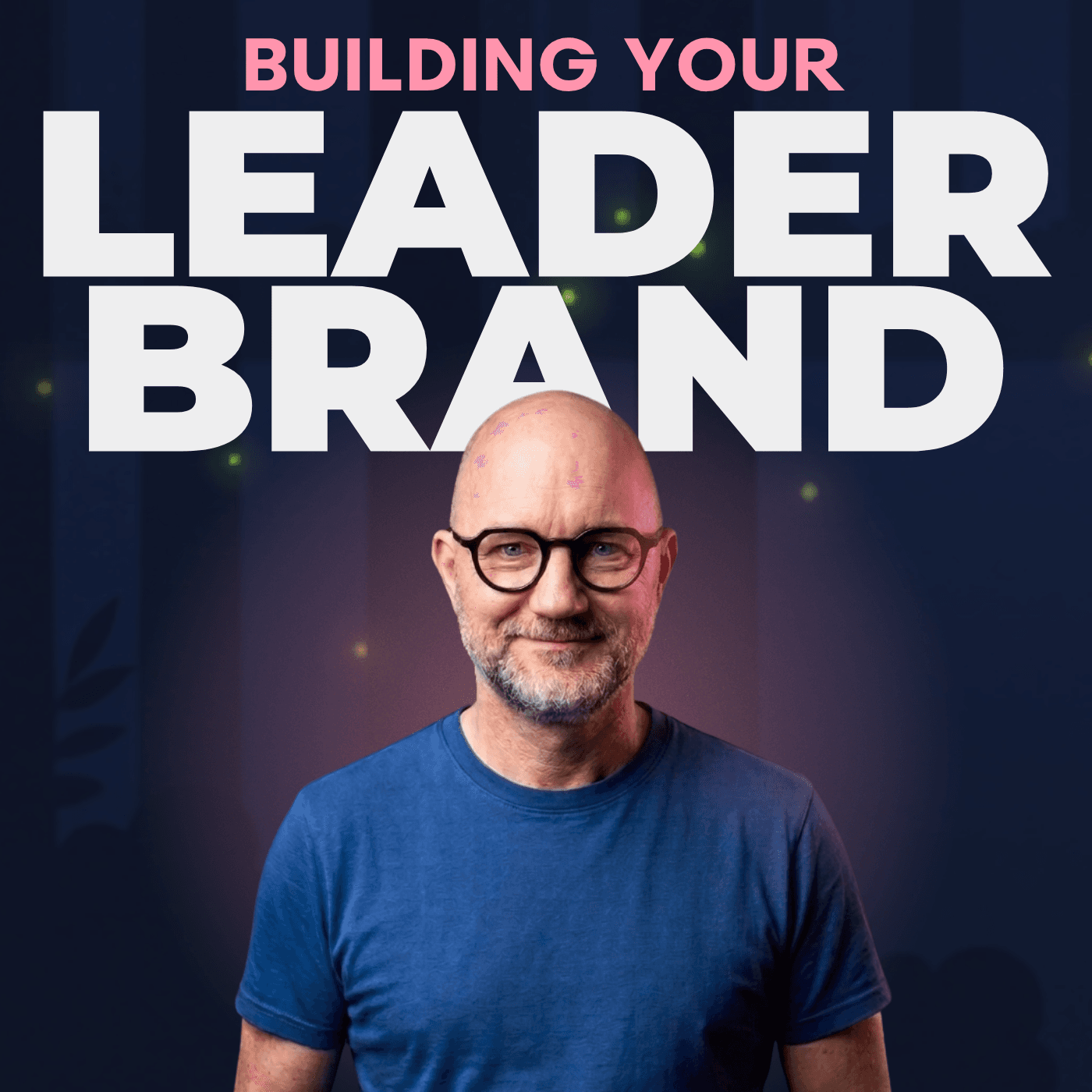
Productivity in the eye of the storm, with Mike Vardy
38:21
AmplifyME Podcast · 2022-02-28
Productivity in the eye of the storm, with Mike VardyProductivity in the eye of the storm, with Mike Vardy
0:00 / 0:00
If you run a business then productivity is the difference between a life of struggle and a life of profit and abundance.
When the fur starts to fly and life gets intense ( a normal state for most business owners ) then that's when your systems kick in. Or to put it more elegantly - Frameworks Foster Freedom.
Tune in this week as I talk about being productive in the eye of the storm with MIke Vardy.
About Mike.
Mike Vardy – also known as "The Productivityist" – is a highly-acclaimed productivity strategist and the creator of the productivity philosophy and framework known as TimeCrafting. He's considered to be one of the top thought leaders in the personal productivity and time management space, with over 15 years of expertise under his belt and having coaching hundreds of clients over that timespan.
His work has been featured in Lifehacker, Fast Company, HuffPost, Inc., and Forbes. Vardy is a renowned international speaker and has taught productivity practices on popular online education platforms CreativeLive, Skillshare, and LinkedIn Learning where his courses are among the most popular in the business category. He also hosts A Productive Conversation with Mike Vardy, a conversational podcast that has featured guests such as Seth Godin, Brian Tracy, Keith Ferrazzi, and Gretchen Rubin – and has been downloaded over 5 million times since its inception.
Mike lives in Victoria, Canada with his wife, daughter, and son.
Please take a second to rate this show in Apple Podcasts. ❤ It will mean a lot to me.
Mentioned in this episode:
Signature Studio
Get started today - signtaturestudio.me
Read transcript
Welcome to Amplify the Personal Brand Entrepreneur Show. Today on the show, Bob is speaking with Mike Vardy.
One of the things that these high achievers do is people who want to be proud productive is number one, they don't do one off sessions. They don't have me come in and say, fix this, and then that's it, right? It's like a high performance vehicle. They take it in for maintenance regularly. They take care of it. It's the same thing with their productivity. I do one off calls with clients. You only get one of those and it's more of a diagnosis. And then after that, it's like you want to work for me. Okay, it's six months. There's an extended period of time.
Hi there, and welcome back to Amplify the Personal Brand Entrepreneurship. My name is Bob Gentle, and every week I'm joined by amazing people who share what makes therapist work. If you've just found this show, don't forget to hit the subscribe button. And if you're on an iPhone, that's the plus icon or the follow button. That way you won't miss a thing. Before I jump into introducing this week's guest, just a quick reminder that after nearly 200 of these interviews, I've learned a thing or two about what makes business work online. And it turns out success does leave clues. And I want to offer you a map. So head over to my website and grab your copy of the Personal Brand Business Roadmap. It's everything you need to start scale or just fix your personal brand business. It's yours for free as a gift from me. Now, if you're anything like me, you're trying to get a lot done. In fact, you're probably trying to get way more done than it's actually possible. And you're overwhelmed. So this week, I'm delighted to welcome the King of productivity, Mike Vardy, to the show. Mike, welcome to the show.
Thanks for having me, Bob. I'm looking forward to our conversation today.
So I have a lot of questions for you. And I was really resisting when we were sort of having a bit of a conversation before I started recording, resisting, jumping straight into, frankly, a free consultation for me for the listener who doesn't know who you are, what you do, why don't you just tell us a little bit about Mike Vardy?
So I am a writer, a speaker, podcaster, and all of that revolves around personal productivity and time management. I've got a philosophy and framework that I've cultivated and crafted over the years called Time Crafting, and I help people stop doing productive and start being productive. That's the aim of the mission. That the calling that I have. I'm also a husband, a father Canadian, a pro wrestling fan, and a lover of very, very good craft beer.
So I'm going to start with a really straightforward, kind of obvious question. It's what my friend Neil, who was like a very senior policeman, called the Daft Lady question. I have a ton of things I want to get done. I have big goals in life. You can't do all the things. So how do you choose? How can I stop trying to be productive and just become productive?
Well and I think that's one of the key things is that when we try to do all the things we're doing productive instead of being productive, we're not choosing necessarily the right things. We have to choose what to chase. Right there's this book called Necessary Endings by Dr. Henry Cloud. He kind of talks about the idea of stopping things or letting things go and he uses the rose Bush as analogy or a metaphor for it. Basically he says if you look at a rose Bush and you let all of the blooms try to Bloom, they will Bloom but they won't be as glorious as if you trim back the Bush and some blooms so that others will flourish. And that's really what we need to do with our tasks, our time, our intentions and our attention, right? Because that's what productivity is. Productivity really is about getting as much done as possible or being super efficient or effective. The latter two are byproducts of productivity really. Productivity is like the active linking between your intentions. So tasks that matter to you need to do want to do tasks and then your attention, which is frankly what you have control over time, moves on whether we want it to or not.
But attention is something that we have more agency over. So ultimately I think what happens when it comes to productivity? We live in this culture of go, go, go, fast, fast, fast, now, now live today. Because tomorrow isn't guaranteed. Like we hear all those platitudes and we don't spend enough time really kind of sitting with ourselves going who do we want to become? Like what tasks, what intentions do we move forward so that we can be the person that we want to be, whether it's work life or hopefully both in terms of balance. So it's okay to have all of these ambitions. But it's also important to note how do I pay attention to them at the right place and time and how do I either let go of certain things, delegate certain things so that I can use or amplify certain elements so I can move these things forward? Once we start to get more realistic about this stuff, we start to realize that instead of trying to check off as many boxes as possible as a sign of productivity, we start to realize that qualitative productivity a mixture of qualitative and quantitative productivity.
This idea of if I do the right things, that's what being productive is all about as opposed to just trying to do as much as possible. That's the crux of it, I think. So at the end of the day, really take a spend some time to be thoughtful about it. I use this phrase saying deliberate and then be deliberate. And I think that if you spend more time in that deliberation phase, then you can be more deliberate with your intentions and your attention.
I really like the gardening analogy there. It works really well for me. And what it brought to mind was a lot of people are in this situation where they're in the weeds and they want to get to a nicely tended garden. And I think in a lot of people's professional lives, it's like what they have to get done. Demands are being made. It's a process whereby they're being pulled rather than they're the ones pushing, they're being directed, they're being essentially blown around rather than being intentional and directing their lives. So how can we move from a place of overwhelmed, a place of overgrown, over commitment to a place where we have made some intentional decisions around what we're going to do? There's a Darren Hardy quote, you make your choices and your choices make you. How can we move from being somebody that's over committing and feels like a lot of the time we're having our choices made for us to somebody who's directing things?
Well, here's the interesting thing. I think further to Darren's quote, I've also said that every choice has consequences, including the ones you don't make. Right. So I think a lot of people, what they do is the external demands. So the demands that come with us through email, through our colleagues, through our family members, like from other people, they are actually the easier ones to fulfill than our own intentions because there is a greater motivator, there's a greater impetus. Sometimes it's money, sometimes it's ego that drives it. Sometimes it's praise, like whatever it needs to be. It's far easier to go into your email inbox, which is why inbox zero is so prevalent. And by the way, the term inbox zero, as it's known today, is not what the term meant. When Merlin Man coined it years ago, it wasn't like get your email to zero. It's about go into email with no questions. When you've jumped in there, go in with missions instead, like know what's there and then deal with it. But it's been corrupted and all that. But that's a whole other topic. But it's fascinating because a lot of people quantitative productivity has become a measuring stick for all productivity.
Right. And the problem is that if you try to do as much as possible, there's only so much bandwidth that we have as human beings. Right. So then quality suffers. So if you're making terrible things or doing things less than par or not to your best ability, then there are long term effects to that. And I think this leads back to the question you asked, which is how do you draw your attention to your intentions? Well, the first thing goes back to the first question, which is realize that you can only accommodate so many of your intentions in a time frame. So per day, per week, per month, what have you when you come to that realization and you kind of decide that, okay, I'm okay with this. Then you have more agency over it. You've made a choice, right. And then you can say, okay, well, every day. And I like the number six for this, right. Because it's the first perfect number. It's a natural number. It fits nicely between this idea of three big rocks. I'll come back to that in a minute. And like ten things per day, like ten things of yours per day seems like a lot with all the external demands from everybody.
The problem with three is that often we call these things three big rocks. You've heard that term before or MIT or whatever is that we haven't broken those tasks down. So those tasks are not actually tasks at all. They're projects trying to disguise themselves as tasks. So that leads to overwhelming. You'll look at your to do list and you'll see work on book or process report or these bigger multi step things on your to do list that are really if you broke them down into smaller particles, then your brain, the part that is so much more likely to go to the external demands of others, like, hey, can you do this? Can you do this? And checking off those boxes as quickly as you can get in those little dopamine hits, if you were to look at a project like work on book and break it down into its smallest particles, you're going to end up with hundreds and hundreds of tasks, right. Or you're going to end up with a lot of them. And all you're doing with that is not adding more to your plate. You're just making everything more visible. Once you realize that that actually will clear out some of this idea of overwhelm, over choice, over commitment, all the things the idea of overload, all these things that are ingredients of overwhelmed, right.
The overload, over commitment and over choice. So when you're able to look at your to do list and go, what are my six things? What are the six things I want to move forward today? Oh, I want to send this email. Okay, that's one. Oh, I want to write 500 words for this report. Okay, that's two. And then you've got all these external demands coming in. You're not going to forsake those, but you're going to not forsake your own intentions on a daily, weekly basis. So it's about just getting clear, having awareness, and then giving focused attention or concentration on the things that you feel you need to do. And you need to do your intentions and the things that you want to do because the reason they are your intentions in the first place is because you've made choices around them. So if you don't give them the attention they deserve, then your day becomes directionless. Your week becomes directionless. And I've said this before, intention without attention is powerless, and attention without intention is aimless. Right. So you have to partner those two things up. And if you have too many of your intentions per day, you're not going to be able to pay attention to them.
And if you give your attention to too many things that aren't your intentions, you're going to look at the end of the day and go, what happened? Where am I? I didn't feel productive today. And it's not because you didn't get things done. You didn't get the right things done. You didn't get your things done.
So something that, again, cropped up as you were speaking, is I'm somebody who thinks of himself as reasonably productive compared to what I would call the average person, I'm probably slightly above average in terms of my productivity and discipline. I'm not super crazy disciplined, and I think a lot of people will relate to this. I'll have one week where I'm working a to do list, and the next week I'll be very schedule orientated. And then I will work an online system for a little bit. And I kind of flit from system to system because I get bored with the system. There's a systems component to productivity. However, there's also almost like a philosophy component to productivity. And I'd be curious on your perspective of the productivity systems versus the productivity philosophy conversation.
Yeah, that's a really great question because I think they do go hand in hand. But the thing we often put the we often put the frameworks before the philosophy or we put the tools before the tactics. Right. So people will download like Sauna or click up or to do list or whatever. Oh, look, I have this fancy to do list, or they'll get the bullet Journal, or they'll do something like they'll get a fancy planner. But the old adage of garbage in garbage outright, if you don't have a framework or a process to put in there, then you're going to wonder, well, how come I'm not getting things done? See, it's the planner or it's the tool. It's their fault, right. Not yours. Right. So you need to not only have a framework and I prefer to use the term framework as opposed to system because frameworks, to me, have flexibility built into them or approach or whatever you want to call it. And I think frameworks foster freedom. If it's a system, they tend to be or a method that word associates associates itself with proven steadfast. Like, there's not a lot of wiggle room.
Again, this is just semantics of how powerful words can be. But if you go in with this idea of I want to make sure that I give my intentions the attention they deserve. So that's really what it is. I intend to do this. How am I going to pay attention to that? That in and of itself is the philosophy. Then it's like, okay, well, I need a system that's going to allow me to pay attention to those intentions, then you can choose whatever tool you want. So even if you're bored, right, with a tool, and we see this happen all the time. That's why productivity apps are a dime a dozen, and people move from app to app to app. But the thing is that if you have a framework that transfers, it not only helps you if you have to, let's say, use one for home and one for another job, or you get hired by another firm and they use something completely different. You can take your framework, your process with you. But Conversely, if you don't have the philosophy or the process in mind that you want to bring to your productivity, then the frameworks aren't going to help you.
You need to have that. First. I would suggest that if you're somebody who likes to and you mentioned this already, you like, one week your Todo list, one week your calendar. I'm a firm believer that both are integral in a productivity workflow. Right. But the way I look at it is the calendar is the directory of your days. You can look at your calendar. Like I can tell you right now that we're in this conversation. This is what I would call an abstraction in my day. It's a blip on the day. It's not a bad thing. I don't want to say a distraction because that would be totally disrespectful to you. Right. So an abstraction is different, right? Like it's something that's there that wouldn't normally be there, but I've left room for it. So now it's there. But when I'm done, I can look at my calendar and say, okay, well, what's next? If there's white space there, then that can be dangerous, right? So that's why I theme my days. My days have themes. So when we're done talking today, if I have nothing on my calendar, I can say, oh, well, today is my triage day.
That means anything. I've tagged in my to do list, which is where the details of my days are that I've tagged with triage. And again, I could use paper or any digital tool for this. I can see. Okay, let me look at the triage tag. Oh, here's all the triage tasks that I can do today. So what I've done is I've filtered my focus, right? And I've used the calendar to start that process. But then the Todo list further refines it. And again, once you kind of get that dialed in and you start to use it consistently, even when things feel like they might break, even when you've got friction of external demands, I can tell you today is not what I planned today to be because I'm driving my kids to school and it's raining here and I got to pick them up. So there's going to be some stuff that I didn't expect to have happen. But whenever I start my day. Whenever I go through my day, all I have to say is I'm done with Bob. Now what do I do? Well, what day is it? It's Thursday. Thursday's triage day.
Okay, let me look at my triage tasks. How many of these can I get done before I have to do this? Or I can do these three things. Okay, great. It's just giving my brain a place to go, a map, a waypoint, as opposed to, well, what do I do now? Because your primitive party brain loves that question because it goes, go watch Netflix or, I don't know, email will tell me what to do. Or let's see what other people want me to do. So that's the crux of it to me. That's why time crafting works so well, because it's flexible, it's durable, it's sustainable, and once you've used it often enough and you've gotten into this pattern, there's a simplicity to it that means that you could use it with whichever tool you like. And if you're a counter person, you can drive your days through theming. If you're a to do list person, you can start to use modes as a driver. Like, what mode am I in? How many five minute tasks do I have for me as a night owl? Ok, where are my low energy tasks? Because it's 09:00 a.m..
Let me look at all of those. I don't care what day it is, I'm tired. Let me see all my low energy tasks. So you just need to give that prefrontal cortex, the higher reasoning part of your brain, the ammunition it needs to go into battle with the primitive part of your brain that just really wants to survive and get by.
Yeah. I think the reason I like a system or a philosophy is really kind of edging on the border between the two is it removes the requirement for you to make decisions. Decisions are what makes us tired, decision fatigue. And I think that's really what we're talking about there. Now I have another question, and it's something that I see all the time. And you must see this all the time as well, that people have big dreams, they have big ambitions, but they spend all their time doing the things that other people want them to do, and they never make any time for the things that are going to move the needle forward. And for me, this is a huge frustration that I see in other people that they know what they should be doing, but for some reason, they always get dragged back into the weeds. What can people do to sort of throw us a pickaxe in the ground, hang on to that, and start moving out of the weeds towards some time for the things that will actually move them forward, rather than those things that just keep them on the hamster?
Let's be honest. It probably happens to us, too, even with our philosophies and frameworks and stuff like that. But I will say that it hearkens back to some of the stuff I talked about earlier. So we hear the word big dreams, right? Well, big dreams are often made up of smaller steps, right. So I think what people do is they don't break those things down. And like, what actions can I take every day, every week, whatever it needs to be? So that way I'm making measured, even marginal gains on these bigger ambitions and these goals, these intentions, because that's really what they are. So that I can ultimately go from doing these things to get to the level where I get to be where I want to be and I get to be who I want to be. Interestingly, alongside that, this goes hand in hand with them in your time, as well as this idea of New Year's resolutions, which I do not like. I do not like New Year's resolutions because there's a lot of pressure around them, external pressure, no less. But also, the time of year is not great for most people to make these because and especially if you're in North America, especially if you're in America, in Canada, we get Thanksgiving way early.
So we've got October covered. But in the United States, basically, from the third week of November until the end of the calendar year, you're in full on. Let's get ready for Thanksgiving or it's holidays or shopping season. We got to finish the year strong. And then you get to December 31, you've got a moment to breathe, and it's like, okay, what big thing are you going to do next year? Hurry up, make a decision. And it's like, and then, of course, one of those things is I'm going to go to the gym, going to get in shape. Well, everybody's doing that. So now all of a sudden you've got a bunch of people in the gym you can't get on equipment or during a pandemic. The gyms are closed. So now what do you do? So to me, New Year's resolution is number one, the time of year is bad. Number two, they are often not again, broken down into smaller components, even into the smaller components of what if you made a monthly resolution? That's why I have monthly theme. So, for example, we're recording this in February. My monthly theme for February, both personally and professionally, is Future proofing.
So I have a tag in my to do list. It's called Future Proof. And I can look. So today, today is Thursday. It's my triage day. I have a choice. Do I want to do what triage tasks do I want to do? I could do that, or I could say, okay, well, what month is it? Oh, it's February. What future Proofing tasks can I do? And by the way, that covers multiple projects. Right? But what's interesting is I can also because I see my day and my months. And again, you've got to remember, this is something that has been developed over years and years. I don't expect anybody to do this right out of the gate. It takes time. I can go. Okay, it's Thursday and it's February. February's theme is future proofing. And today's theme is triage. What triage tasks can I do that are also future proofing? So again, I'm further filtering my focus. And that's really in order to achieve those bigger dreams, the ones that you want to accomplish this month, this quarter, this year, in the next five years, breaking those things down and making measurable improvements like you would when you go through your email inbox and you get one email taken care of, or when you go on Facebook and you check the messages there, those little dopamine hits, they disappear really quickly.
But if you're making marginal gains on these goals through breaking things down, giving yourself some way points, such as through monthly theming, that kind of thing, instead of resolutions, you're going to see those. You're going to see those grow. Your garden is going to grow. And again, back to the gardening analogy, Bob. If you weed more often, if you weed your garden more often, it's not as taxing than if you wait a week to weed it right. Or a month to weed it right. So the more you tend it every single day. And I learned this through watching The Gangster Gardener. One of the quotes he said that I loved is if you want to feed people quickly, you feed the plants. But if you want to feed people sustainably, you feed the soil and you take care of the soil and let the soil feed the plants. And that's what you have to do with your intentions as well. You can't just feed the plants because the next time you try to do something, the soil will not be rich enough to grow. So you need to feed the soil. And the soil is though, you have a solid foundation so that you can keep growing.
And that's where, to your point, the productivity philosophy and the productivity system or framework comes in handy.
So I would like to speak about how you help your clients next, because it kind of dovetails with another question I have, which is everybody's on a journey that nobody's finished yet, but there are people who have been on certain journeys longer than others, and you work with some very high achievers. I'm curious to know, hey, how do you work with people on their productivity outside of simply being an author and speaker and podcaster? And what are those people? What are the super productive people doing differently? Because the truth is, if you parachuted me into the business of one of your high end clients, I would destroy it probably in a matter of weeks. So I'm curious to know, what do high achievers do differently from a productivity perspective over what you might call a Muggle to use a Harry Potter freeze.
Well, depending on what house they're in, I would say one of the things that these high achievers do, these people who want to be productive, truly productive is number one, they don't do one off sessions. They don't have me come in and say, fix this, and then that's it, right? It's like a high performance vehicle. They take it in for maintenance regularly, they take care of it. It's the same thing with their productivity. So that's one of the reasons why I do one off calls with clients. But you only get one of those and it's more of a diagnosis. And then after that, it's like you want to work with me. Okay, it's six months. There's an extended period of time because these things take time to take hold, number one. And number two, there will be biases that show up along the way. I can tell you a real quick example is when I told somebody that they needed to change this is somebody who really wanted to get a lot of things done. They had high ambitions. And they said, I'm spending too much time, as David Allen would say, polishing the runway, right?
David Allen is the father of getting things done. Gtd. And there's like these Horizons of focus. And this person said, I'm spending so much time on these, like, low level tasks. And I said, well, you're polishing the runway, as David Allen would say, which is when you're not getting any higher up in these Horizons. And I said, one of the things that will help. And I alluded to this earliest idea of what words do you use if you're calling things in your to do list just to do or tasks or stuff, there's not a lot of power behind that. Again, the idea of creating a more powerful and compelling reason to work on things is important. Some people like the idea of having a scoring system so that's when I work with people, I talk about the productivity ROI, the realized objective index that I came up with, which is a need to do and ought to do or want to do. And they score it that way. But with this person, I also said, you need to not call these tasks. You need to call these intentions or actions, at the very least, because an action, insights, action.
So they'll put verbs in front of things so they can start to create patterns around the verbs that they're continuously seeing. And that's what they wanted to do. And they pushed back initially because they said, well, intentions to me are bigger things. And I said, well, aren't these things big things to you? I said, Try it. Just try it. Try calling these your intentions. Call this your am list instead of your to do list, like an action and mode list, or call whatever. And they did. And as silly as it sounds, just like when people are blown away. When I said, one of the biggest things you can do for your to do list is just make sure every one of those tasks starts with a verb. Everything on it. They're like, oh, my God, that's amazing. And some people are like, well, I always do that. I don't understand why that's such a revelation. I said, because people are busy. People don't think about that. They just want to get things out of their head. And sometimes that step gets missed until you build it in. But this person started calling it their intentions.
And because productivity is about putting attention towards your intentions and linking them, they started to really get things done. So the key to high achievers is that they are weeding the garden constantly. They are a gardener. They are not somebody that just goes out and checks and sees if there's anything growing and goes back inside. They're weeding, they're tending it. And when I work with them, they push back. But the nice thing is I also have a background as a stand up comedian and performance artist. So when I get it's akin to heckling sometimes. So I'm able to handle it. Okay. But at the end of the day, when they're thinking about high achieving, they're not thinking like, I want to be super productive. At the end of the day, it's like I want to be more intentional, more balanced. And I want my attention to go where I needed to go. Because where your energy flows, your attention goes, and where your attention goes, energy flows. Right. I think that's a quote from the Sellerston prophecy. But that's the idea. And also the other thing is they realize I'll throw another quote in here.
There's this John Steinbeck quote. And now that you don't have to be perfect, you can be good from Book East of Eden. They don't try to be perfect. They may have tried initially, but there's no perfect system and things will fall down. You will have things fall through the cracks. But once they get past that idea of perfection, then they can start to really move things forward in the direction that they want them to go in.
Something I would like to ask you about. This is probably the last area we're going to play in. Obviously, you are the productivity guy, and we've spoken a lot about productivity. But I'm curious to know, obviously you've built a business around this. You are a personal brand entrepreneur. You're fairly successful. What has that journey been like for you? And how do you maintain your own personal visibility? And what productivity challenges do you experience around that? And I guess the main question for me is, okay, you're super productive, but what do you actually find hard? What do you struggle with?
That's a great question. They say we teach what we need to learn the most, right? That's probably why I fell into this, because this was not the. I mean, my origin story has been told on several other podcasts and through my work and stuff like that. I'm not going to get into that. But what I will say is, I'll tell you that for a while I actually resisted the idea of being a personal brand. Originally, my website was called Vardy me like it was named after me and it was musings. I mean, I was obviously in the productivity space. So we're talking like ten. This would have been like 1213 years ago. So after I finished writing for some of the other sites and really started to forge out on my own. And then one day I said, you know what? We need to be bigger. There needs to be a veneer here. I don't know why I thought that maybe it was this idea that if I show that this is a bigger company, it's going to generate more revenue. I can't even remember why I made this choice. But we went from Mike Vardy to productivity is now what's interesting is that people have always called me the productivity list.
But I push back on them like, no, anybody can be a Productivityist. And I still truly believe that because a productivity list is anybody who is an enthusiast or around productivity, they want to be more productive. They are a Productivityist. It's just are they an enthusiast? Are they a specialist? Are they a strategist? Where are they at? But everyone, including the guy who produced my podcast, kept calling me the productivity list. But I still kept calling the company productivityists. And all of a sudden the posts and the approach went from this earnest, almost kind of community oriented, or Mike is within reach kind of interactions I was having with people. It felt colder, it felt impersonal, and I noticed it. I didn't just notice it from people saying it. I noticed it in the bottom line. And it took me the awareness, I guess. I think it was on a personal retreat. I went away up island here. I live in Victoria on Vancouver Island. I went on a retreat and I said, you know what? I am swimming upstream because that's what I've been told or I heard somewhere that that's what I needed to do.
But this doesn't feel right. So what if we went back to I'll be the Productivityist. But what if we just went back to Mikevarti.com? I owned the domain. People know me as I'm not going to sell the company. It's not like I'm trying to get I have an exit strategy. This is who I am. This is what I do. And I just made that call. And as soon as I made that call, Bob, I felt lighter. I felt like a weight had lifted. And that was a huge thing. The hard thing was number one, admitting that I needed to do that. And then the second thing was actually the shift is still in progress. As we're recording this. So we're in the middle of redoing the website. So it's going to be Mikevardy.com instead of productivity.com. The process of shifting back has been hard, but not like resistance, hard. Just I want to do it right. Not perfect, but I want to make sure that it's done in a way that I would feel proud that I would be like, this is the way I would do it. So embracing the personal brand aspect of it and recognizing that Mike Vardy is not just the productivity as Mike Vardy, as a husband, a father, a Canadian, a wrestling fan, a beer fishing out of all those things was really once I cracked that nut, not only did it help me make me feel lighter, but it helped me realize again, the things I should be doing versus the things I shouldn't be doing.
I cut a bunch of things out, and as a result, I was more productive.
I think one of the things a lot of people struggle with with personal brands is actually making them all about them. I know you have a background in a bit of acting and things like that, so you're probably more naturally outgoing. I wonder if Imposter Syndrome has ever come knocking the door with you.
Always. You said, like, I'm the productivity guy, and I'm sitting here going, no, there's lots of other guys.
My product.
But it does show up. It shows up. That's one of the reasons why it's taken so long, and we're in the process of it right now. But for me to get, like, a published book, like, traditionally published book, because part of that process for me has been, well, this has been written already, or who am I to do? So it shows up a lot. And the reason I'm fascinated by biases is because they affect everyone, every human. It's one of the things that humans are unique to. We have biases, but what we can do, as opposed to, like, say, other mammals, is we can break them. We have the ability to break them if we choose to, but we live in a world that is constantly spinning, pushing things in our direction, which unfortunately distracts us from being able to do that. Okay, give me a second. Like, the time and space that we need to break. Things like Imposter syndrome, confirmation bias, recency bias, all these things that kind of keep us from getting to where we want to go and being who we want to be.
Mike, I think that's probably a brilliant place to just bring things to a close. If I ever hear that somebody doesn't experience Imposter Syndrome, I'm a little anxious because for me, it's a very clear sign there's still work to do. There's still potential there that's unlocked, untapped, rather. So I'm thrilled for you that Imposter Syndrome is there, because clearly that's something that can be lent into for the listener who maybe wants to take things further with you wants to find out more about you. How can they do that?
Well, I've got a worksheet that you can get for free on my website. I think it's a good place to start. Plus, when you get the worksheet, you actually sign up for my email newsletter that I sent out once a week. I also will send occasional emails. Outside of that, my attention newsletter is the main one. But if you go to Productivityus. Comdobedue, you'll be able to get the starting six worksheet, which will help you highlight your six intentions on a daily, weekly, whatever frequency you want basis. So if you head again to productivity.com, Dobby do be do you'll be able to get access to my email list? I'm on Social at Mike Vardy on Twitter and all that stuff, too. But I encourage you to start that URL and that way you can start to again link your intention and attention and be truly productive.
And Mike, what's one thing you do now that you wish you'd started five years ago?
Meditation, without a doubt. Without a doubt. And not just meditation because it took me a while with the app. Like I was using apps where I was using Calm and Headspace and views and all that stuff. I'm finally able to meditate without those. I feel that if I was meditating five years ago, I would have been able to Hone my focus and concentration better earlier. So that way I would have been able to maybe get more done again. I don't look back with a ton of regret on that, but I've seen the benefits of meditation, and I think it's that old story where the businessman talked to them. I think it was the Zen Buddhist Monk and said, I really need to meditate. I'm so busy, what can I do? And the Monk said, well, meditate for five minutes a day. And the businessman said, I don't have five minutes a day. And then the Monk said, well, then meditate for 20 minutes a day. I think that we could all use a little meditation in our lives, even if we take just a beat. Or as Juliet Funk says in her book, A Minute to think we're all going to be in a much better place.
But I wish I started that five years ago.
You know what's spooky is? Two interviews in a row, same answer. Something he's trying to tell me something.
Yeah, you should meditate on that.
Mcfarl, you have been an awesome guest. It's been a pleasure and it's been a thrill. And I'm very grateful. And I look forward to hopefully meeting you in person someday soon. For the moment, thank you so much.
Thanks for having me, Bob. I had a great time.
Before I go, just a quick reminder to subscribe and join our Facebook group. You'll find a link in the show notes or visit amplifyme. Fminsiders. Also, connect with me wherever you hang out you'll find me on all the social platforms at bobgentle if you enjoyed the show then I would love a five star review on Apple podcast it would make my day and if you shared the show with a friend, you would literally make my golden list. My name is Bob gentle thanks to you for listening and I'll see you next week.