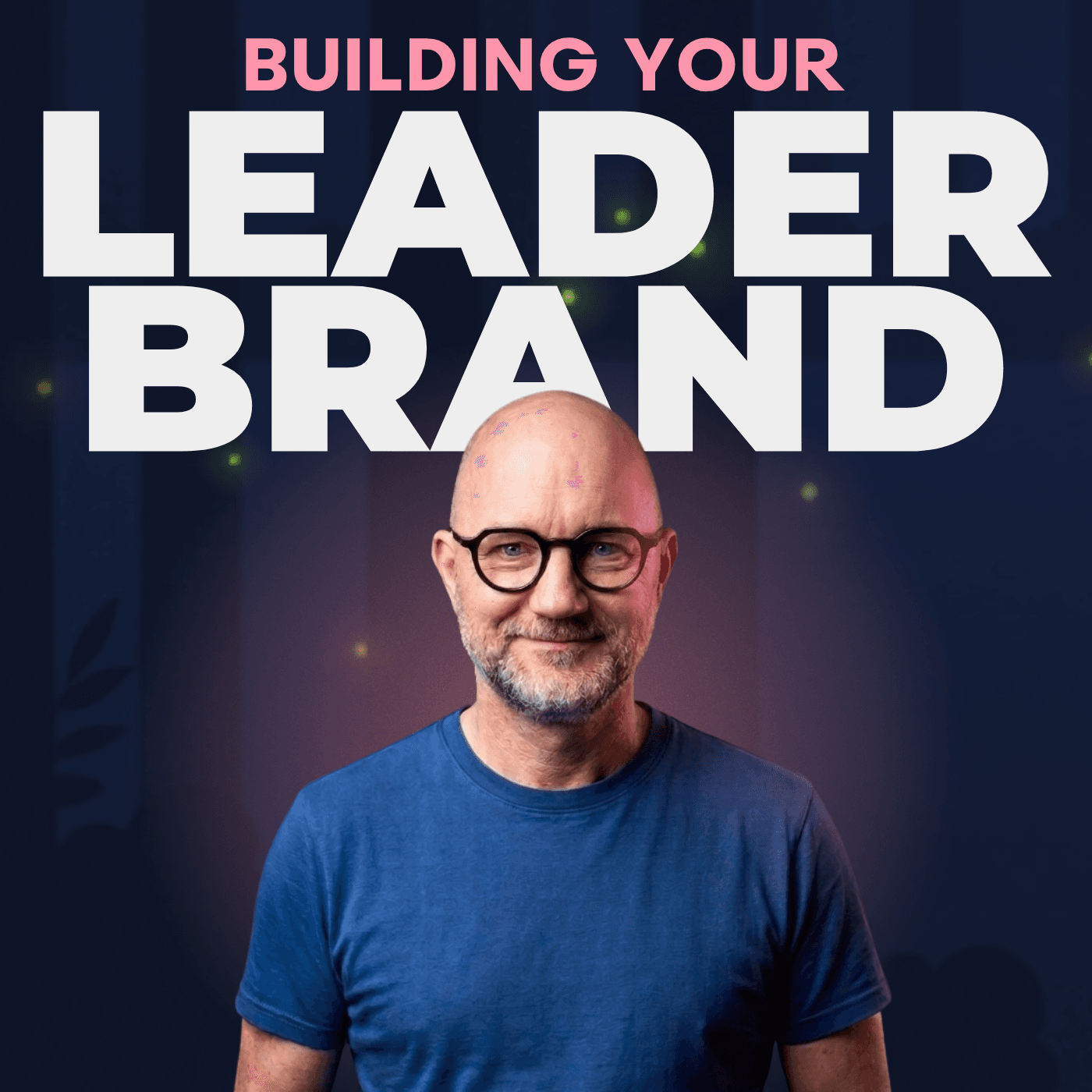
How You Spend Your Time Builds Your Future, with Gordon Callum
40:59 · Episode 349
Episode 349 · 2026-07-27
How You Spend Your Time Builds Your Future, with Gordon CallumHow You Spend Your Time Builds Your Future, with Gordon Callum
0:00 / 0:00
If you've spent decades building a business, leading organisations, or establishing yourself as the go-to expert in your field, retirement can feel like a cliff edge rather than a launchpad. Gordon Callum knows this territory well. He built Changing Point into a respected change management consultancy over 20 years, then realised - during the pandemic - that he'd done almost no thinking about his own retirement. That moment of clarity led to Retiring Point, and this conversation.
This one isn't just for people looking ahead to retirement. The themes here - identity, purpose, planning for transitions, and how you invest your time - apply at every stage of a career.
✳️ The financial side of retirement gets all the attention, but the non-financial side is what determines whether it's fulfilling - identity, purpose, relationships, and the emotional rollercoaster of the transition all need the same planning rigour you'd apply to a business initiative.
✳️ Gordon's behavioural change cycle - awareness, thinking differently, application, and follow-through - transfers directly from change management to retirement planning, including building a rolling 12-month plan towards a clear vision rather than a single grand plan.
✳️ Personality type shapes what a good retirement actually looks like. Extroverted thinkers need goals and competition; extroverted feelers need variety and multiple projects; introverted feelers need a cause to align with; introverted thinkers need structure and rhythm.
Gordon's Amplifiers
✳️ Balance the non-financial with the financial - give real attention to purpose, identity, relationship dynamics, and emotional wellbeing, not just the pension pot.
✳️ Retire into something, not from something - spend the 2-3 years before retirement experimenting with projects and possibilities so you have something to run towards from day one.
✳️ If you have a partner, create three retirement plans - your own individual plan, theirs, and a shared plan for what you genuinely want to do together. Communicate all three openly.
Timestamps
00:00 - Introduction and welcome
01:55 - Meet Gordon Callum - from Changing Point to Retiring Point
04:10 - Why most senior leaders arrive at retirement unprepared
05:06 - Identity, purpose, and the non-financial side of retirement
07:19 - What does a healthy retirement actually look like?
09:07 - The cliff edge vs the easing-off approach
12:00 - How personality type shapes what fulfilment looks like in retirement
15:50 - What drove the success of Changing Point
18:18 - Client acquisition and the long-term client strategy
19:59 - The frameworks Gordon has brought from Changing Point to Retiring Point
22:27 - The imagination gap and creating a retirement vision
24:21 - How you invest your time today builds your future
26:01 - The danger of going harder in your final 12 months
28:06 - Changing Point to Retiring Point - the shift to a global virtual model
30:58 - Amplifier 1: Balance the non-financial with the financial
33:06 - Amplifier 2: Retire into something, not from something
34:36 - Amplifier 3: Have three retirement plans if you have a partner
37:45 - The Retiring Point scorecard and how to connect with Gordon
39:11 - Wrap-up and close
If this episode made you think differently about how you're investing your time right now, hit follow on Apple Podcasts or subscribe on Spotify. A review takes 30 seconds and makes a real difference.
----
Get your copy of my Personal Brand Business Blueprint
It's the FREE roadmap to starting, scaling or just fixing your expert business.
Please take a second to rate this show in Apple Podcasts. ❤ It will mean a lot to me.
Mentioned in this episode:
Signature Studio
Get started today - signtaturestudio.me
Read transcript
Speaker 1 (00:03) Welcome to Building Your Leader Brand. Speaker 2 (00:06) Today on the show, Bob is speaking with Gordon Callum. I think that's a good way of looking at it, is have projects that you are retiring into so that you're actually looking ahead already and you're ready to, to run the minute you do retire. If you retire from something without anything to go to, you will always be looking back. So have something to look forward to and retire into something. Speaker 1 (00:36) Hi there and welcome back to Building a Leader Brand. My name's Bob Gentile and every week I speak with amazing people who share their secrets to building, marketing, and monetizing their expertise and the mindset you need for your business to grow and thrive. If you're new, and I ask this in all seriousness, take a second to either follow if you're on Apple Podcasts or subscribe if you're on Spotify. Any other signals you'll tell those beasts, like a like, a review, anything like that, they're inordinately helpful. This podcast is currently ranking on Listen Notes in the top 2%. I would be amazed, I would be delighted if I could get them down into the 1.5%, and that's all in your hands. So again, if you're new to the show, you will love the Personal Brand Business Roadmap, 50 pages of everything you need to start, scale, and fix your expert business. You can visit the link in the show notes or visit amplifyme.agency/roadmap. So this week we're talking about changes, big changes. They come in all shapes and sizes and at all points in life. And it's almost like I set it up to help me talk about transitions, whether that's a pivot in business, whether it's a big pivot in life. Speaker 1 (01:55) Gordon Callum from Retiring Point, welcome to the show. Speaker 2 (01:58) Good morning. Nice to see you again, Bob. Speaker 1 (02:00) Yes. So we've known each other for a while, and I think you're best known as the change management guy. I think lots of people listening, if they were to Google you or if they've heard of you, which in the UK they probably have, if they have any interest in change management, that's what you're best known for. But as a chap that's taken a step back, letting other people take the reins in that business, you're not slowing down and decided to take all the learning from Changing Point into that big transition in life. Well, not the biggest, but a big transition in life where people move out of full-time work and into what some might call retirement. But I'm doing it again. I always do this. I run ahead and I start talking about the things that matter about the guests, but What would really help me is if you could introduce yourself to the listener who's maybe meeting you for the first time. Speaker 2 (02:53) Yeah, okay. Good morning, everyone. I'm Gordon Callum. I'm the founder of originally Changing Point, as Bob has mentioned, and more recently Retiring Point. And if I can just give you a sense of what Changing Point was about, it was an organisation focusing on the behavioural aspects of implementing change successfully. And I'd been running that business for about 20-odd years, and it was during the pandemic that I suddenly had a bit more time to think, as we all did, just slowing down and actually getting more time to think about myself. And at that stage, I was entering my 60s, and I suddenly realised that I had not given any consideration to my own retirement. I've been so busy running the business that that just had never really crossed my mind. I'd been having an annual review with my financial advisor, so the financials were taken care of, and that wasn't really a concern. But it suddenly just hit me that, you know, what am I going to be doing in retirement? What am I really going to be doing with my time? It's all very well having the money, but I'm just not ready. I'm not prepared for this. Speaker 2 (04:10) So, that was where the idea for Retiring Point, where that came in, realising that if I was struggling with that, probably a lot of people in the same position, maybe business owners, really senior people in organisations that are so busy and focused on work that they're not really thinking about themselves at all as they're approaching retirement. And when they get there, they're just not ready. So, That's where the idea of retiring point came from, Bob. Speaker 1 (04:40) I think there are all kinds of transitions in life, as I mentioned, and retirement is one of the most— it's not immovable, but we're all growing older. Time's not going anywhere. And it's probably the most obvious, almost inescapable transition. But there are many transitions that we go through in business, and I think we kind of stumble through them. Speaker 2 (05:06) Yes. Speaker 1 (05:07) With your work in Retiring Point, you're kind of focused on not the financial aspects, but almost the identity aspects. Because a lot of people, when they move out of full-time work, there's a loss of identity that can lead to a loss of purpose, that can lead to a loss of meaning and fulfilment in life. And I think what you were describing there about planning for retirement a couple of years before, a lot of the time in these earlier transitions, we have them forced upon us, or we just react in the moment to an opportunity. In your work with retirement, is there anything that you look at earlier in your life or in the lives of other people where those same lessons could or should be applied? Speaker 2 (05:55) Well, I think in general, for senior people who are who are really leading change very often in the work that they're doing, they would never leave things to chance and never leave things to the last minute. They would have a very clear plan of what they wanted to do and have really given consideration to all sorts of options that they could consider. So the level of thinking that they would put into delivering change effectively is huge, and that's what I find quite quite a surprise really how often the people I work with, and this includes myself, how little thinking has been given to the whole idea of creating the right level of retirement, the right kind of retirement that they really want to look for. So, I think most people, it tends to just be the financial aspects that they give the attention to for decades and then they often leave the thinking about retirement to the very last minute, which is quite contradictory to what they've done in their business lives. So it's quite interesting. They feel it's almost a selfish thing that if they're focusing too much on number one, they're not focusing on their business or not focusing on the organisation they are leading. Speaker 2 (07:14) And I think they need to just get that balance a little bit better. Speaker 1 (07:19) So interestingly, you answered a much better question than the one I asked. And it kind of begs the question, what in a healthy world does retirement look like? Because if we go back to the 1950s, retirement was, you're not allowed to work anymore. Go and get an allotment or a garden or walk a dog or take up bowls or bowling or something like this. We know that's unhealthy. What does a healthy retirement look like from, I guess, a longevity perspective? Speaker 2 (07:51) Yeah, it's a great question. And I don't think there's a simple answer to that one because I think it depends very much on the individual. I think the idea of the cliff edge retirement was what used to happen way, way back. People would retire very suddenly. They knew a date that they were going to retire and that was it. And then it was a real quite a shock to the system. Now, Now, a lot of people still experience this. A lot of people still experience that cliff edge, and I'll come back to it. But obviously, over the last maybe a couple of decades, there's been more of this, almost a transition to ease off, maybe into 3, 4 days a week, or reduce down to 4, 3, 2, that type of thing. Now, in theory, that sounds fine, but for the people that I work with, Even if they're trying to do that, I think they find, like a lot of people who work part-time, they still end up working more than they should be. And they find it hard to actually let go of something they feel so committed to. So I don't think it's quite as simple as let's just have a kind of easing-off plan for chief execs and C-suite level and partners in legal firms. Speaker 2 (09:07) Accounting firms or business owners, that type of people, that's who I tend to work with most. They find it quite hard to, to follow that approach. So the theory is there, but for a lot of people it still ends up being more of a cliff edge ending. So in some ways, what the way that I look at it now when I'm working with people, I try to help them with the transition over the last couple of years or so of their working life. So that's part of the work that I do, help them to transition away from the role that they have, as well as starting to think more about themselves and what they really could do in their retirement and actually trying a few things out, giving themselves permission and time to experiment over the last 2 years with things that they might want to try and see if it's what they want instead of waiting until they retire and then starting the experimentation and finding that it's not what they wanted or not what they thought. Speaker 1 (10:12) I read a very strange book once, and in it they were talking about the importance of what they described as anomalous activities. And that if you're in a routine and you stick to that routine, you're very unlikely to experience new things that will lead to actual change. Whereas if you intentionally put yourself in a situation where you will experience unusual things, you're far more likely to invite synchronicity that actually drives real growth. And yes, I think when you're coming up to retirement, when your identity is that bound, as I think it is for most business owners and leaders, we spent so long with that single focus that when we look at it sort of diluting, there's not much left behind. And that requires an intentional replacement, which begs the question for me, you have almost certainly heard of this Maslow's hierarchy of needs. And I think for a lot of people thinking about retirement, there's a lot of anxiety about the financial side of things. And so they're operating from lower down that hierarchy. But when that's not the case and you're operating from higher up the hierarchy, a lot of people, I think at the top of the hierarchy, I'm no expert in this, but I think self-actualization is when everything else is taken care of, identity, how do I feel about my role in the world becomes prime. Speaker 2 (11:44) Yes. Speaker 1 (11:46) But that's not the case for everybody. Lots of people are motivated by very different things. And I'm curious to know how diverse what lights people up is in your experience when they're moving towards retirement. Speaker 2 (12:00) Yeah, it's a really interesting question, Bob. And one of the things that I encourage everyone to consider as they're approaching retirement is what their personality preferences are. And, you know, a lot of people I work with have already had profiles done— Myers-Briggs, Insights Discovery, or DiSC, or something like that— so they are aware of their behavioural preferences. And I think that actually is very important. But when they are doing that in a business environment, it tends to be more from a leadership viewpoint that you're actually looking at what your behaviours are like and what's your impact on others. What I like to do in Retiring Point is get people to use a persona profile that is retirement-focused and get them to put a retirement hat on when they're answering the question here, to actually get them to think about what the real personality is, not the person that they are maybe trying to be, to be effective in work, because I think sometimes you're having to modify yourself to the culture of an organisation. So I think that's an important thing for each individual to understand what motivates them. And that goes part of the way to answer your question in terms of their needs. Speaker 2 (13:23) Because if you have someone who is, let's say, a very extroverted thinker, they naturally will want to have goals for the retirement. They will remain competitive. If that's the real them, they will still want to have competition and goals to, to go for in the retirement. If you've got someone who's more of an extroverted feeler, they will want plenty of variety. So for them, it's going to be how many different projects can I get involved in and spin so many different plates, because that's what they, they love. They love variety. If you have more of an introverted feeler, they like to be involved in a cause. So for them, it might be finding one key thing that they align strongly with, with their values, that they want to invest more time in. And then finally, if it was more the introverted thinker, I find that these are the ones that absolutely need to find a new rhythm of life. They're quite structured individuals and like to have a clear plan that they're going to follow through. And I find working with them that they really struggle actually at the beginning. They need to find this new rhythm quite quickly, otherwise they feel, feel quite lost. Speaker 2 (14:39) So I don't know if that answers your question, but I think it depends on the personality type as to what they should be seeking to give them fulfilment and motivate them in retirement. Speaker 1 (14:51) I have a strange confession to make. I've never heard of an extroverted thinker or an introverted feeler. This is all news to me. I have some work to do. There will be people listening who are very far from retirement, And that's okay. I think I would like to consider myself one of those. But if anybody wants to give me a phenomenal amount of money, I'm not averse to it. However, you had a very successful business in Changing Point and constants in business don't really change. The technology changes, all kinds of things do change, but there are constants. And I'm curious to know what it was that you feel drove the success in Changing Point? And if you were going to be advising anybody who was maybe in a similar space, because I know a lot of people who operate in this space and they often fail to thrive, what advice might you give them? Speaker 2 (15:50) Well, I think with Changing Point, the simple premise was that organisations and businesses are always going through change. That's part of the kind of nature of business. And I think what I'd experienced personally in the past— my background was in pharmaceutical industry, and I'd experienced mergers, takeovers, restructures almost on an annual basis. And what I found was that most organisations have a focus on strategy and process and not so much on people. And for me, that was the, the key thing that I wanted Changing Point to focus on the behavioural and the people side of change. How do you align people to a new strategy? How do you align people to new processes and get them to buy into that? And quite simply, that was the approach that I took in Changing Point from day one, and that's something that I've continued, and it has always been that way, that it's the people first to get them aligned to the changes that are going on in the business. That will actually deliver the change in the end that you're looking for. If you focus too much on process and strategy, you will inevitably fail. You know, there's a very well-documented statistic that 80% of change initiatives fail to deliver, and it's because often the people are not aligned to these changes. Speaker 2 (17:24) So that constant for me is the people side of change, and I've never wavered from that. It would have been easy to kind of move into more into the process side of things and all that. But we've always focused on that one aspect, that one element, to deliver the results that people are looking for. Speaker 1 (17:45) And I can imagine how that drives retention and most certainly drives referrals. But the initial acquisition, I think, is often a challenge for people. Obviously, you have to keep them, you have to provide a great customer experience. But the acquisition in the first place, I think a lot of people also struggle with. And I know that being in business with Changing Point for as long as you were, you wouldn't have remained in business if you didn't have a good process around that. What did that look like for you? Speaker 2 (18:18) Well, in terms of the process, the intention was always to have long-term clients. So when we won a client, we were not looking at that as a one-off project. We were there to exceed expectations through the delivery of tangible results that they were looking for. And if they could measure the impact of the results that we were delivering, I knew that that would likely result in further work. So that was the intention that we, we always aimed to overdeliver on the expectations with the aim of having long-term clients. And that, that was what was very successful. So sometimes we would have, you know, a major change initiative in an organisation that would— we'd be in there working for maybe a couple of years, and then we wouldn't be in there for maybe another 5 years, and they would call us again because they knew that they needed help to implement the next change they're going through. And that was great. We were very happy to operate that way, to have that kind of regular call back from previous clients? Speaker 1 (19:25) No, I think being in the change management space, you have processes for that. Everybody knows that people in change management, they have frameworks, processes in order to move people from one place to another in a structured way. Moving into retiring clients, What have you brought with you in terms of frameworks, and what process can people looking at working with you now expect? Speaker 2 (19:59) Yeah, that's a very good question, and I have borrowed quite a bit from the experience of Changing Point to modify it to be relevant to Returning Point. So I think one key thing for people is to recognise that moving into retirement, a lot of it is breaking habits. So I think first of being aware of our habits and our preferred behaviours is an important starting point. So that's one of the things that we definitely introduce. Then getting them to think differently about how they could break these habits to make retirement different and the way that they want it to be again. How are they going to do that? Put that into practise through application. And then importantly, the follow-through, which is the thing that requires resilience in, you know, any change that people are making. If you're really going to follow through well, you need to build up momentum for the change that you are trying to implement. So that whole model is one that we've been using. It's a cycle of behavioural change that we've always used in Change Your Point. I'm now using in Retiring Point, but now it's more about getting people to think about their retirement vision. Speaker 2 (21:15) So having a clearer picture of what their ideal retirement would be rather than from a business perspective, and then trying to get them to think about how they are going to achieve that through small steps. I'm not trying to create a grand plan, but I try to get people to create rolling 12-month plans that help them move towards that vision. Of retirement that they're looking to. So it's very clear that this plan will evolve. It's not going to be a case of having a one-off business plan, a one-off retirement plan. It will evolve as they experience the phase of retirement. Speaker 1 (21:55) I think that evolution is really interesting. Something I've noticed is that in my work, when I sit down with a brand new client, or even at the prospect stage, and ask them, if you got to choose the future, what would that look like? It— there's an imagination gap, and sometimes they're so accustomed to just doing what's expected. Having the freedom to look ahead and think, well, if I got to choose, if somebody just gave me a sheet of paper and a paintbrush, what would I do? Speaker 2 (22:27) Yes. Speaker 1 (22:27) Oh my goodness. Speaker 2 (22:28) Yes. Speaker 1 (22:28) I don't know what to do. And this imaginative exercise, it does beg the question of how would an artist approach this? And they start with a little sketch, and then that sketch lives in the physical space for a while, and it triggers the subconscious, and then inspiration hits, and they think, oh, I could do this. And then there's another sketch, and then over time, the piece of work emerges. Retirement is a piece of work if you approach it properly. Speaker 2 (22:55) Yes. And I think to your point, what you've been saying there, the way that I get people to think about this grand word, vision. It's a much overused word, but trying to simplify it, if we think about what you're doing with your time, how are you investing your time today? So if we think about that, all the elements of life that you have, so that is, you know, how much time are you spending in work, how much time are you spending with family, how much time are you spending with friends, how much time on hobbies, How much on health and all that kind of thing, travel. And if you actually do a bit of an audit of how you're spending your time, that's you in effect creating what I would call the world map. Today's world map, this is the map of your world as you see it. And then I get them to think about retirement and what they would like to do with all of these elements of life and how they want to reinvest their time. So how would you reinvest that time on family, friends, social life, work? If you still want to work, how much do you want to work? Speaker 2 (24:02) And by doing that, it's actually a simple way of creating a top-line vision because that is your new world, that is your new map of the world that you are creating by just thinking about how you're going to invest your time. So that for me is a simple way of getting people to think about their retirement vision. Speaker 1 (24:21) There's a really powerful correlation there to anybody listening. I've had to write this down in uppercase. How you invest your time today builds the future quite literally. And something I find quite often is people will nod their head when I talk about, for example, the importance of maintaining contact with important people from your legacy network in very small ways. And they nod their head and they say yes. And I tell them about the importance of showing up on a regular basis. And they nod their head and say yes. And then I look at their profiles 3 months later and absolutely nothing's happened. It's like having a high-interest bank account and never paying into it. And you spent the money on cheese puffs instead. Quite literally sometimes. A metaphor I often come to is, how do you build a time machine? Starts with imagination, it crystallises down into vision, and then we have a plan. And then from that plan, we have projects. From the projects, we have tasks, and then we have daily action. We are in complete control of the future. And so many people feel helpless, and it's at the micro level of the small actions that we take today. Speaker 1 (25:35) How you're investing each minute is a choice. And as I say that, I'm reflecting a lot on my choices and thinking, I can do so much better. Speaker 2 (25:44) Yes. Speaker 1 (25:45) But for retirement in particular, when you're really looking at a whole new chapter of life, everything is open to you if the commercial side of things or the financial side of things is not the millstone around your neck. Goodness me, what you can do if you choose to. Speaker 2 (26:01) Yes. Yes. And interesting on the kind of time aspect, I find it quite fascinating that I've worked with one or two clients who have had very senior roles and they've come to me for help once they have retired and they've had this kind of cliff edge experience. But the last 12 months of their work, instead of easing off, they've actually invested even more time in work because they wanted to go out with a bang. They wanted to go out, they were so committed to what they were doing, either in their business or in their very senior position, they wanted to go out and feel that they had done their best as they left. And yet when they've gone, they have not thought about themselves at all. So almost they've deprioritized their, the time investment in the things that they're going to be doing in retirement. So that, that I think is a danger for a number of very senior people, is that they sometimes feel that they, they need to work even harder in these final 12 months. And again, that's where the support and challenge that a retiring point can give them can make a big, big difference. Speaker 1 (27:13) I think I love the metaphor of a cliff edge. I think a lot of people do treat it as it's almost you got to get your homework done before the end of the week. We never did the homework anyway, but looking at it like a runway, you need to get to the end of the runway for launch and the launch is the thing. It's what comes after you leave that is what this is all for. We don't work to work. We work a lot of the time to get to the point where we can have the grace to not have to. I'm interested to hear from your perspective, obviously Changing Point was a, a sort of Scottish central belt UK national company moving into retiring point. Now you're really looking at it with a very global perspective and what difference have you found moving into retiring point from changing point? Speaker 2 (28:06) Well, interesting, changing point actually was more global than you were suggesting. We ended up doing work in Africa, America, various parts of Europe. So it wasn't purely UK. The bulk of it was the UK. So moving into retiring point, yeah, the key difference with retiring point is that I'm operating Retirement Point mainly virtually rather than going in, in person to organisations as I was doing with Changing Point. So that's one of the big differences. It's been done virtually, so therefore it can be across the globe in terms of reach. So the, the programme that we offer is an online programme with virtual coaching support. So the virtual coaching is, is there to provide that support and challenge to people going through it. So that's probably one of the main differences, that rather than mainly being in person as it was with Changing Point and really physically being there, this is much more kind of online, which is great. But it also does mean that from a time perspective, I need to remember the time zones across the world, which is a slightly new challenge to me in terms of I could work more or less through the day if I wanted to. Speaker 2 (29:23) So that is a new challenge that I'm having to work with. Speaker 1 (29:26) Avoid Australia. I'm only kidding. If you're in Australia, you're my favourite. So when you talk about it being a virtual experience, I think I'm going to push back a little bit and say it's a very virtual Gordon Callum experience. It's not like you're punting this off to delegates. I think this is— yes, it's a very intimate experience, as far as I understand it. Speaker 2 (29:51) Yes, I mean, the, the whole point about it is with the coaching support, we, we really get close to, uh, to people to just to really challenge them and support them during the transition. So as I was saying before, the ideal timing really is actually helping people as they are slowly transitioning away from the work. So it's like executive coaching with a kind of double prolonged approach. So still thinking about work and how you're actually going to let go, but then starting to think more about yourself as you're starting to prepare for retirement. So yes, it is very much hands-on that way, but done virtually. Speaker 1 (30:30) So we should pivot into— see what I did there— pivot into part 2, where we're going to look at Gordon Callum's 3 amplifiers. So these are 3 things you at home can do, read, listen to, eat, exercises. Gordon is going to surprise me. He's not been allowed to tell me what his 3 amplifiers are. So Gordon, amplifier number 1. Speaker 2 (30:58) Well, number 1, we've touched on it already, but I think that everyone needs to give serious consideration to the non-financial aspects of retirement as much as the financial aspects. I think we tend to all focus too heavily on only the financials, but there really isn't much point in having, you know, a great kitty there if we don't really know what we're going to do with it at the end. So it's really important that we actually balance the non-financial with the financials. And what I'm really meaning by that What is the clarity of purpose and direction? What is the identity that we are going to have going forward? A future-focused identity rather than a retrospective identity. How are relationship dynamics going to change? Because inevitably they do. There's a kind of massive change when, you know, maybe you're around with your partner 24/7. It's quite different to the way it has been. So all these things and the emotional ups and downs, because there's no question of it, this is an emotional roller coaster period that you go through in the pre-retirement stage as you move into retirement and then post-retirement. There are massive ups and downs. Speaker 2 (32:12) The whole emotional experience is huge. So, non-financial, give that real focus. Speaker 1 (32:19) It's really interesting listening to that. I totally agree and you paint a very clear picture of that. But I think You could argue that the same should be true at every stage of life. Certainly for me right now, the financial side of retirement are a very sharp focus for me, shovelling as hard as I can. But at the cost of what? And I think that's something people could really listen to is create a bit of space for an identity that exists on its own. And that's something we should probably be thinking about. At all points of life, but certainly looking towards retirement, because if you don't have that, you're going to find yourself without very much and probably with some challenges psychologically. Speaker 2 (33:04) Yes. Speaker 1 (33:04) Amplifier number 2. Speaker 2 (33:06) Number 2, um, I think this is a really important one, and that's retire into something rather than retiring from something. Now, The reason for that is almost back to what I was saying before. If you are preparing for your retirement and maybe the last 2 or 3 years you're experimenting, you're trying things out, maybe new hobbies, it might be a new form of work. There might be some sort of new initiative. For me, like Retiring Point, Retiring Point is one of my retirement projects and I call it project and I think that's a good way of looking at it. Is have projects that you are retiring into so that you're actually looking ahead already and you're ready to run the minute you do retire. If you retire from something without anything to go to, you will always be looking back. So have something to look forward to and retire into something. Speaker 1 (34:06) I love the idea of a portfolio. The way you're retiring into something is a beautiful way of putting it. A lot of the people I work with are pivoting out of full-time work into what they would call a portfolio career. That sometimes comes a bit earlier in life, sometimes it comes a little bit later, but it's all about choice. You get to choose that, and it doesn't have to be for money. It could be for whatever lights you up. It's entirely up to you. Speaker 2 (34:31) Yes. Speaker 1 (34:32) Amplifier number 3, Gordon Callum, what have we got? Speaker 2 (34:36) Number 3 is to, if you have a partner, is to think about having 3 retirement plans. Okay, it's very easy for people to say, well, we need to have a retirement plan jointly that we are going to live together happily ever after with. I think the reality is that it's much healthier to have your own individual retirement plan, your partner's individual retirement plan, and then the shared aspects that are common to both that you really do want to have together. I think the danger can be that you can suffocate each other if you do not have that freedom. So back to what I was saying before about personality types, if you and your partner are quite different personalities, which often is the case because opposites attract, then it is quite important to have your own freedom to do the bit of the retirement that you really want as well as that for your partner, that they have the time and the focus on the things they really want, but then still having this joint plan that you really definitely want to live together. So I think that would be it. Have 3 plans. Speaker 1 (35:47) I think it's really interesting. It would be so easy to be self-focused and think, I need a plan because I'm the one who's retiring. But I'm not the only one who's having a life change. This is assuming that perhaps I'm the only one that's retiring and the partner isn't for whatever reason. Yeah. Maybe they weren't working, maybe they're just not retiring. But my point being that you can't have your own plan without giving that to somebody else. And because if you don't, I mean, I might decide to throw myself into reinvigorating the British space programme in my retirement. Yes. But if that takes me away from home all the time, that's conflicting with my partner's plan she might have had. And we haven't discussed this, and this is really problematic and kind of the thing I do all the time, I'm honest. Speaker 2 (36:38) And actually, the point you're making there, I was going to come back on because I think the whole thing about having the plan and discussing and sharing your plans is so important because if you don't do that, it can end up with frustrations. In fact, that happened to me. It was my daughter that has taken over Changing Point. So Jane now runs Changing Point. And she said to me one night, you know, Mum's really disappointed in you. She thought you were going to retire. So the reason that she was disappointed was the fact that she was seeing me working away on Retiring Points and hadn't realised that this was one of my retirement projects. As I'm saying, it's not a full— I'm not trying to do this 24/7. Every day of the week. It's an important retirement project for me, but I hadn't communicated that well enough to my wife. And it was only this feedback from my daughter saying that my wife was disappointed. And that highlighted to me how important the communication and sharing of the plan is. So it's all very well having these plans, but you need to be open and discuss them. Speaker 1 (37:45) So on your website, you have the Retiring Point scorecard. It's awesome. Speaker 2 (37:51) Yes. Speaker 1 (37:52) Everybody, if you're even vaguely looking ahead at retirement, you must go and do that. It's retiringpoint.com. Have I got that right? Speaker 2 (38:00) Retiringpoint.com, yeah. Speaker 1 (38:02) And if people are feeling vaguely Gordon Callum curious and they're thinking, this might be something for me, maybe I'd like to have these conversations, what would you like them to do? Speaker 2 (38:14) Well, I think that the best thing would be, yeah, if you go to the website, as you've said, Bob, and the scorecard is there to complete that. It's a retirement readiness scorecard that only takes about 2 or 3 minutes to complete. And I think that's the easiest way of getting a sense of what we're doing in retiring point. But by all means, if anybody wanted to contact me directly, find me on LinkedIn and obviously through the website, you can catch me there. The other thing you might want to do if you're interested there's a podcast that I've started off a couple of months ago now called Retiring Pointers. And Retiring Pointers is me really having conversations with people, senior people who have gone through retirement or are approaching retirement, and they're sharing their personal experiences of that whole retirement journey. So again, that's maybe something else for people to look at. Speaker 1 (39:11) Well, hopefully they will go and do that. If you are vaguely thinking about retirement, Gordon is definitely your guy. If you've got this far, thank you very much for listening. You are awesome. And that does bring us to the end of another episode. Thank you so much for spending some of your time with us today. If you've enjoyed the show, you will love the Personal Brand Business Roadmap, 50 pages of everything you need to start, scale, or fix your expert business. If this conversation sparked something for you today, then I would love for you to leave a 5-star review. That's 5, count them if you're on video, wherever you listen to podcasts. And see you again next week. Gordon, thank you for your time. You have been awesome. Speaker 2 (39:54) You're very welcome.